When to Listen to Advice – and When NOT to!

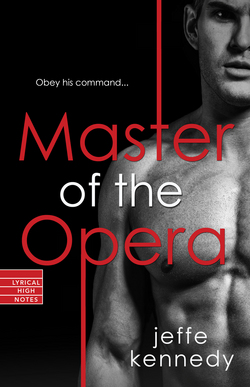
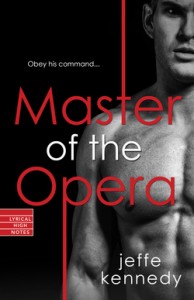
Master of the OperaThose of you who’ve waited (nearly forever!) for a consolidated version of my serial novel, MASTER OF THE OPERA, it starts shipping from Books a Million tomorrow. It’s in paper only. If you want to read it digitally, you still have to by each of the six episodes separately. Good news is that the first episode is FREE. So you can try it out and see if you like the story – then go for digital or paper, as you please.

Other housekeeping items:

The second New Release Newsletter from the Science Fiction and Fantasy Writers of America (SFWA) goes out tomorrow! Subscribe to learn about new releases from the best-selling Sci Fi and Fantasy writers out there, AND have a chance to win free books! You can sign up here.

Also, I’m teaching an online class on writing sex scenes starting tomorrow. Getting Away from Wham, Bam, Thank You, Ma’am – only $15 for non-members of OIRWA!

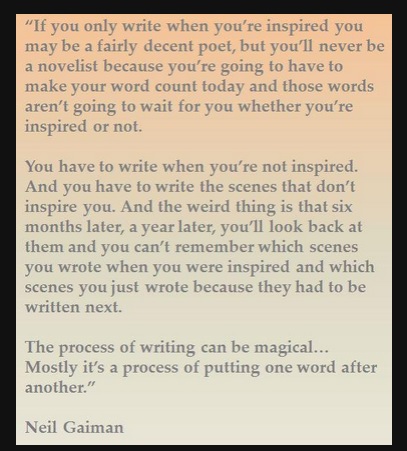
Now, on to what you really came here for. A bit of a rant on listening to advice.

So, yesterday I was at my nail salon, getting a manicure. The place is run by two Vietnamese sisters and their husbands. The sisters sit next to each other (which I find fascinating, but that’s another story) and my gal’s sister was doing the nails of a lady who must be a lawyer. The sister’s husband took notes as lawyer gal gave them advice on dealing with a construction/contractor problem on their house. She told them exactly what to say, how to say it and when to escalate.

It was all really good advice and they were lucky that she shared it so freely.

That said, not all advice is good advice. Free or purchased.

The thing to remember is that people LOVE to give advice. I’m not exactly sure why, because it can be a time suck and often you can put a lot of effort in trying to give thorough, solid advice and then the person who asked doesn’t listen. Of course, there are plenty of people who try to make careers of advice-giving. Those are the ones who charge huge amounts to teach you how to write a bestseller or how to be a millionaire. (I’m cynical – I always want to know why they aren’t making money by writing bestsellers or making millions a different way.)

Hopefully this isn’t ironic, given that I pimped my online course above. 😀 However, I didn’t teach writing or give writing advice for a really long time – until I thought I had something solid to give. And my point today goes beyond writing advice, though it certainly centers there. My author loops are full of people offering their opinions, sometimes insisting on the rightness of their advice and battling others to “win.” A dubious trophy, at best. Twitter has the #pubtip hashtag which *anyone* can toss up there – which means the advice can be good or atrocious. Very often the latter.

And people’s friends and families – usually well-meaning – give tons of advice. A newbie writer messaged me recently, apologetically asking for advice on querying agents, etc. I was happy to answer her questions, as she asked very nicely and has supported my books. I was sorting through a bunch of misinformed ideas she had, when she mentioned that her family had told her a bunch of it, particularly regarding the publishing industry and self-publishing. I had to tell her to stop listening to her family. I’m sure they’re lovely people, but their “advice” seemed to be entirely drawn from skewed media stories. Not that self-publishing isn’t a viable option – of course it is. But what the media likes to broadcast and what’s the real scoop can be two wildly different critters.

My point is that, with all things, when listening to advice, consider the source – particularly their motivation and their experience.

As I mentioned above, people have a wide range of motivations for giving advice. Some of the time it’s to make money off of people, which is at least straightforward. A whole bunch of the time it’s to feed their egos. Spreading advice and opinions is a great way to pump up one’s feeling of self-worth and mastery of a topic. I’m sure I’m guilty of this from time to time, but mostly I try to restrain myself to giving advice only when I think it’s because it can be helpful. I believe this is the only motivation to trust.

As far as experience, there’s a Catch-22 in that the people with the most experience and the best advice to give are frequently way too busy to give it. Beware of people with so much free time that they can spend it giving lots of advice. Conversely, when someone with lots of experience in a subject offers you advice, listen to it! The lawyer next to me at the salon knew her stuff. The advice she gave was probably worth $500 and hour and she gave it for free – or maybe for the price of a manicure – and they listened diligently. I’d even add that the advice is particularly valuable if it contradicts ideas you already had. That doesn’t mean you have to take it – but it does mean you’ve been given something you didn’t have before.

And that’s my advice. For what it’s worth. 😀

Happy weekend, everyone!


Learning My Own Lessons

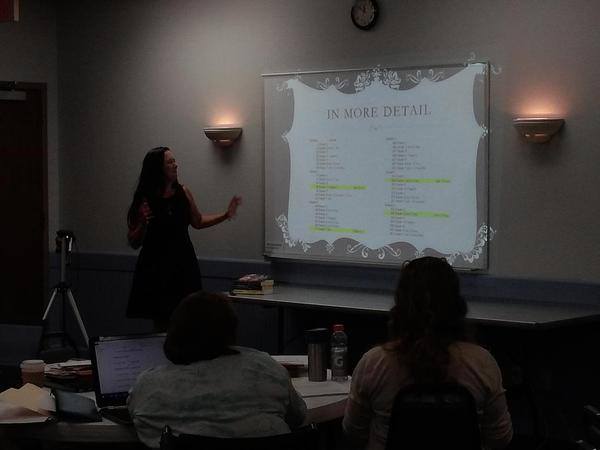
MORWA workshop picA couple of weeks ago, I had the fabulous and fun privilege of flying out to St. Louis to teach a workshop to the Missouri Romance Writers of America (MORWA). They asked me to talk about structuring a serial novel, largely because of this terribly geeky blog post I wrote about it. (I think that’s a data point right there when people ask if writing blog posts is meaningful at all. Just saying.)

 In order to explain my method of structuring a serial novel, I started with the basic structure I use to structure any work. We talked quite a bit about the Three-Act Structure, where Act 1 is the first 25%, Act 2 is the middle 50%, going up to 75% through, with Act 3 being the final 25%. As with many RWA chapters – and one of the things I love about RWA – the members ranged from newbie writers stretching their muscles for the first time up to award-winning pros. So, as I was going over this structure pretty fast, in order to lay the foundation for the rest, I threw out that you know you’ve finished Act 1 because all the stakes are set. And that a solid first 25%, done correctly, will prevent the middle of the book from “sagging” or losing momentum. If you’re having problems with the middle 50%, go back and look at the first 25% and make sure you truly set all the stakes.

One of the newbies put up her hand and asked what that meant, to have the stakes set. Always a good reminder to me that stuff I take for granted at this point isn’t second nature to others.

I explained that the first 25% should introduce the characters, who they are, what they want and why they can’t have it. Some talk about the Three-Act Structure being that you get your protagonist up a tree in Act 1, throw rocks at them in Act 2 and get them down again by the end of Act 3. Setting the stakes is getting your hero or heroine firmly up in that tree.

 So, I’m back home and fully plunged into writing THE PAGES OF THE MIND, which is Dafne’s book, the fourth in my Twelve Kingdoms series. In order to meet deadline, I’ve set myself what is for me a fairly grueling pace of 2,200 words/day, six days/week. As I have a full-time day job, that’s about the most I can do consistently. Some days I do more in the time I have, some days considerably less. The considerably less days are the ones where I circle back and revise or add to previous scenes. (Adding is nearly *always* involved.) I write my books beginning to end, so I really hate circling back like that. It feels like I’m not making progress.

I was getting all frustrated with myself this week about it.

Guess where I’m at? Yeah – 26,000 words, which for those who don’t speak math, is right at 25% of what will probably be about a 105,000 word book. (Most novels are 80,000-120,000 words. Fantasies like this can be on the longer end of the spectrum.)

It hit me sometime yesterday, that OF COURSE I’m doing a lot of circling back, layering and tweaking. I’m setting the stakes for the rest of the book! Once my Act 1 is solid, the rest will fall into place more easily. I know this. I freaking taught people about this a couple of weeks ago.

How easily we forget.

I’m feeling much better now!

Speaking of The Twelve Kingdoms, we’re kicking off the blog tour (heh – I first typed “bog tour,” which isn’t nearly so fun) for THE TALON OF THE HAWK. Today there’s a very juicy excerpt – one of my favorite scenes! – at the Chosen by You Book Club. Let me know if you like it, too. Hee hee hee.

Also, the Science Fiction and Fantasy Writers of America (SFWA) is starting a bimonthly (every two months, not twice a month) newsletter of members’ new releases. I think it will be great! You can subscribe here.

Have a great weekend everyone!

What Would You Write If You Weren’t Afraid?

CDSdpCIUsAEKz9EI saw this question go by on Twitter a bit ago and, as things seem to do at certain times, it really struck me. I can’t recall who posted it – if it was you, please say so and I’ll give you credit!

Some of you out there will be shaking your heads at me and joyfully proclaiming that you are not afraid. I know you are because some people said that back to me on Twitter. You write exactly what you want to write and screw the rules! Screw the critics, the gatekeepers and reader feedback!

Good on you!

I mean that seriously. It’s a great place to be. I used to be there and I miss it.

And probably “afraid” isn’t exactly the right word for what I feel at this point in my career. It’s more an umbrella sense of caution, of all the voices in my head, whispering as I write. With newbie authors I’ve often given the advice to throw people out of the room who are metaphorically looking over their shoulders. I think pretty much every one of us has to figure out how to overcome that in the early days – writing sex scenes that would shock your grandmother, expressing opinions your dad would have a fit about, starting a sentence with a conjunction which would have been points off in AP English. That’s a big challenge and not easy to do.

Then you get past that – you have to, if you’re going to free up your writing voice – and you write books and everything goes swimmingly for a while.

Until you find yourself writing book four of a popular series that straddles genres in a way that’s generating a lot of interest and discussion and suddenly new, different and LOUDER people are in the room with you. I’m hearing voices I never heard before about the marketplace, what my agent thinks, what my editor expects, what my author friends are saying, what reviewers identify as ways I need to grow as a writer or how I do or don’t fit within the genre. These voices are in many ways much more difficult to shut up because I have respect for their opinions. This isn’t my grandmother reiterating an uneducated attitude. These are smart people with intelligent things to say.

Things that can get in the way.

I heard this before, when I was a newbie writer, and professional writer friends advised me to enjoy that time. They said there’s a freedom to writing then that you lose later, when you have expectations laid on you from people like editors, agents and so forth. Naturally, I barely listened, caught up in my envy for their book contracts and success. But they were spot on correct.

I think it comes down to this – that I’m not always writing what I would if I didn’t have those expectations. Or rather, more accurately, writing what I would if I didn’t have those voices is more of a battle.

I want to write what I’d write if I wasn’t afraid, if I didn’t anticipate the reactions to the book it will become. So I’m focusing on this question. As I’m spinning the story, when I hit a decision point and the voices rise up, chattering about how other authors did it, what the market wants, what the award-givers will value, I ask myself how I’d do it if I weren’t afraid of their censure.

And I do that.

It’s an ongoing process. A lesson I feel like I’m learning anew every day, with every writing session. Maybe this is part of growing as a writer in this stage of my career – finding ways to stay true to my own storytelling in the face of more and more people having an investment in what I do.

Anyone else out there dealing with this? Any advice on banishing those voices? I’m open to advice!


How to Build a Better Villain

sunrise in Daytona BeachI’m writing from the Coastal Magic Convention, right on lovely Daytona Beach. I’ve been doing sunrise beach walks each morning with fab book blogger Jen from That’s What I’m Talking About. Wonderful way to start the conference day!

I’m over at Word Whores today, talking about how the development of positive traits builds better villains.