The “No One Edits Me” Syndrome

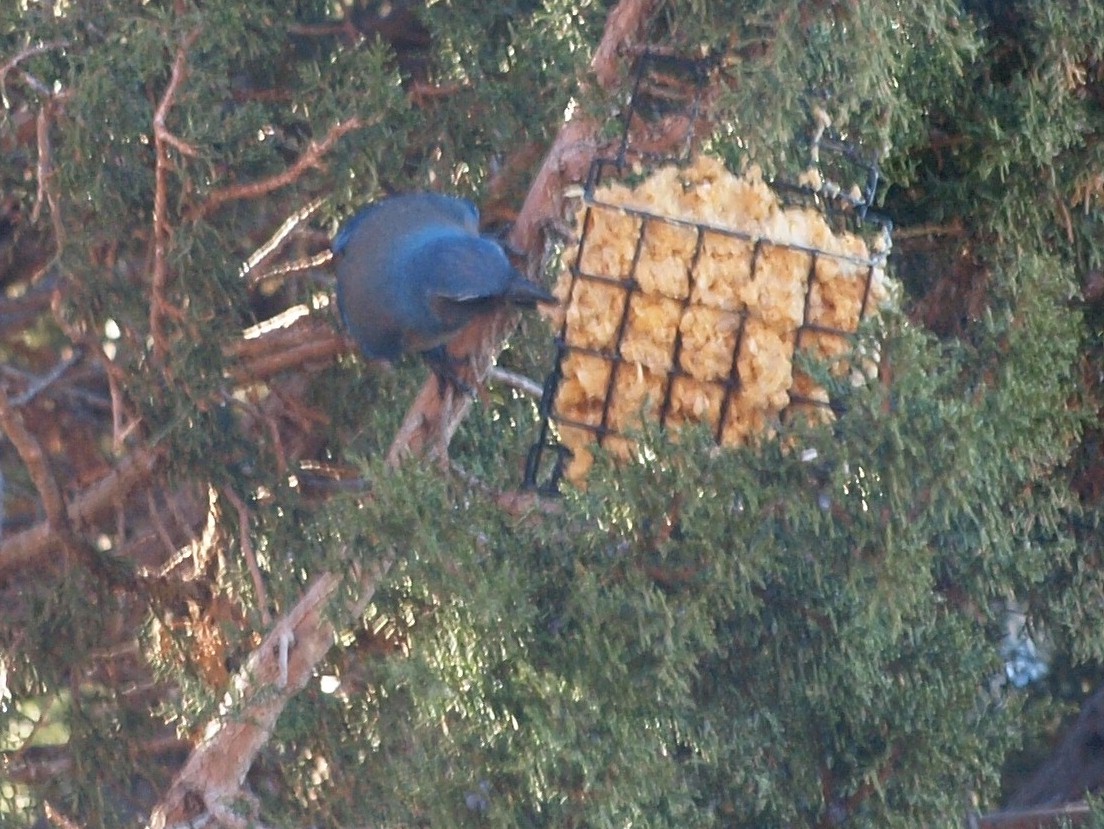
This isn’t a great photo, but I wanted to show you all what a pretty blue this pinon jay is. He doesn’t much like me pointing the camera at him, though.

For today’s installment on the How My Day Job Has Made Me a Better Writer series, I want to talk about Quality Assurance (QA).

I once saw an interview with Anne Rice, who has long been one of my very favorite authors. This was right around the peak of her career. After The Witching Hour, when the Lestat books were oh-so-good. She was riding high, confiding to the televised audience that she’d been given a phenomenal amount of money for her next six books. She even said how much it was, as her contract forbade her to do, so that we would all know we could do it, too. At one point, she gave the interviewer a look and said, “Oh, believe me – No One edits ME.”

I’ve never forgotten it.

Especially as I slogged through her next books, each worse than the last, chock full of rambling and irrelevant information. I wondered what the hell she was thinking. Now I understand what her problem was.

She didn’t spend years in a corporate day job.

I think a lot of us have this idea about our work, whatever work it might be, that there’s something holy and perfect about it. And, if someone finds a flaw, this is somehow a personal indictment. When we’re young, especially, it’s almost unbearable to receive criticism of our work. Each point feels like a little flesh wound and we’re terrified of bleeding out.

In a work environment, you grow out of this really damn fast. Or you don’t succeed.

My firm does environmental consulting. I usually say I’m a data-jockey, but a seat-mate on an airplane recently corrected me and said, “No, you’re much more, because you understand policy. You look at the numbers, but then you bring the understanding of how to apply them in real-world situations.” That’s likely apropos of nothing, but I thought it was an interesting insight.

But that is what we do. I work with a lot of really smart people and we’re paid to give good advice. Our CEO often remarks that we have practically no inventory – the value of the company rests entirely in the brains of the staff. If our numbers aren’t spot-on or our reasoning isn’t sound, then we have no product.

QA is king.

We have levels upon levels of QA. People read, they spot check, they read again. If a client questions anything, we go over it again. Exhaustively. Believe me, if you ever had any ego tied up with being edited, you lose it. They’re not flesh wounds. This is people telling you when you have spinach in your teeth before the big photo shoot. Edit me – please!

On one of my writers’ loops lately, someone commented that an editor had asked for a revise and resubmit. She said she didn’t agree with the editor’s take and so she planned to self-publish it. I thought of my current client, who asks for all kinds of revisions I don’t agree with and how I do them anyway. Now, granted, this is my client’s report and not “the book of my heart,” but it is also my job. That’s what they pay me to do.

It occurs to me that, if I want them to pay me to write, then it becomes my editor’s book, too. And my publisher’s book. If I want them to invest in me and my book, then we all work together to make it a great product. As a writer, I have no real inventory. All the value is in my head. Without careful polishing, I have no product.

That’s just good business.

How My Day Job Has Made Me a Better Writer

Writing is a funny business.

We all know this. It’s a funky combination of emo artistry, social climbing, and snake-oil salesmanship. Now with the internet, we all get a ringside seat to the various shenanigans. The word “professionalism” gets bandied about a lot. Unfortunately, the people who seem to use it the most, often wielding it like a club to silence detractors, are the least professional at all.

From time to time I’ve bemoaned my corporate day job. For a number of years now I’ve been working towards supporting myself as a full-time writer. I’m lucky to work for a company whose mission I believe in and who treats me well. I’ve been with them coming up on 15 years. I’ve learned a great deal over the years, about dealing with colleagues, with clients and all the delicate balances of the corporate world.

I’ve realized recently that, as much as I’ve wished I’d spent the last 15 years writing instead of in this career, what I’ve learned will make me a better writer overall. So, I’m going to spend the next week or so exploring some of these lessons. Things like:

1) Understanding billable hours and being good at knowing how long something will take to do.

2) Taking advantage of leave time, because you need it.

3) Accountability and working with other people.

4) Working when you don’t want to.

5) Professional relationships – remembering the boundaries

6) Teamwork – dealing with edits and QA/QC

Let me know if you all have other topic ideas. I might even host some guest bloggers, if you have a particular tale to tell along these lines.

Should be fun!

Expertitis

My family jokes that David and I spend a lot of time at Christmas offering “tech support.” We help everyone set up their new devices and work on their lists of things that haven’t been working right. They like to say that every question brings them one step closer to us booting them out the door, but we don’t mind. It’s good to be helpful.

And, at least we can filter out the easy stuff from what needs to be advanced to the experts.

Back when I was in graduate school, lo these many moons ago, one of my professors had a sign on his office door that read something like “Experts don’t really know more than anyone else. They’re just better prepared and have slides.”

I tried to Google this for a source, but had little luck. The quip has been scrambled about many times. And, of course, this version is obviously quite dates. Slides?? Do you all remember making slides for presentations – where you’d photograph pages, develop the film (special slide film), cut the square you wanted from long strips and glue them into the little slide frames? It took DAYS to prepare for a presentation. And then you had to cart those slide carousels around… Now we fiddle with our Power Point presentations up until the last minute and simply plug in the laptop. Technology is such a wonderful thing.

ANYWAY.

My point is, I’ve always remembered this sign. And the wisdom of it.

This particular professor was very good at giving advice in a very new field at the time, of environmental toxicology. There wasn’t a lot of data yet. Most environmental toxicology works through chronic exposure. It’s difficult to draw a line from a few childhood years spent paddling beneath the paper mill to the cancer death 40 years later. In another hundred years, we might have some really good data. But I digress, yet again. What this professor could do was bring a wealth of experience in science and explain concepts in a way that people understood and could get excited about.

He also had a team of grad students to make really good slides.

So, though he had the critical thinking and clarity of self to recognize that as an “expert” he wasn’t really all that special, that very perspective made him really good at knowing what he didn’t know and gave him the drive to fill those gaps.

The flip side of this is the people who consider themselves experts without this wealth of experience.

I see this a lot in social media. Writers with no publication credits, or paltry ones, offering writing advice. Writers who get hired as editors with digital publishing houses who then start offering editing tips. People starting up digital publishing houses from their living rooms and weighing in on the state of publishing.

In a way, the interwebs are the great leveler. Quality of content is all. So, arguably, good advice is good advice and will win out. However, a lot of stuff out there floats to the top and it’s not exactly cream.

It’s a disease, really. Expertitis. Born of our longing to be vindicated, to be legitimate in a business that rarely offers these rewards. How do you quantify a successful writer, editor, agent or publisher? The recognition of our peers is a fickle thing. Money follows the trends, not necessarily the quality. In many ways, I suppose we have to crown ourselves, because no one else will.

But that takes some clarity and critical thinking.

It’s really not about the slides.

Dreck and Melodrama

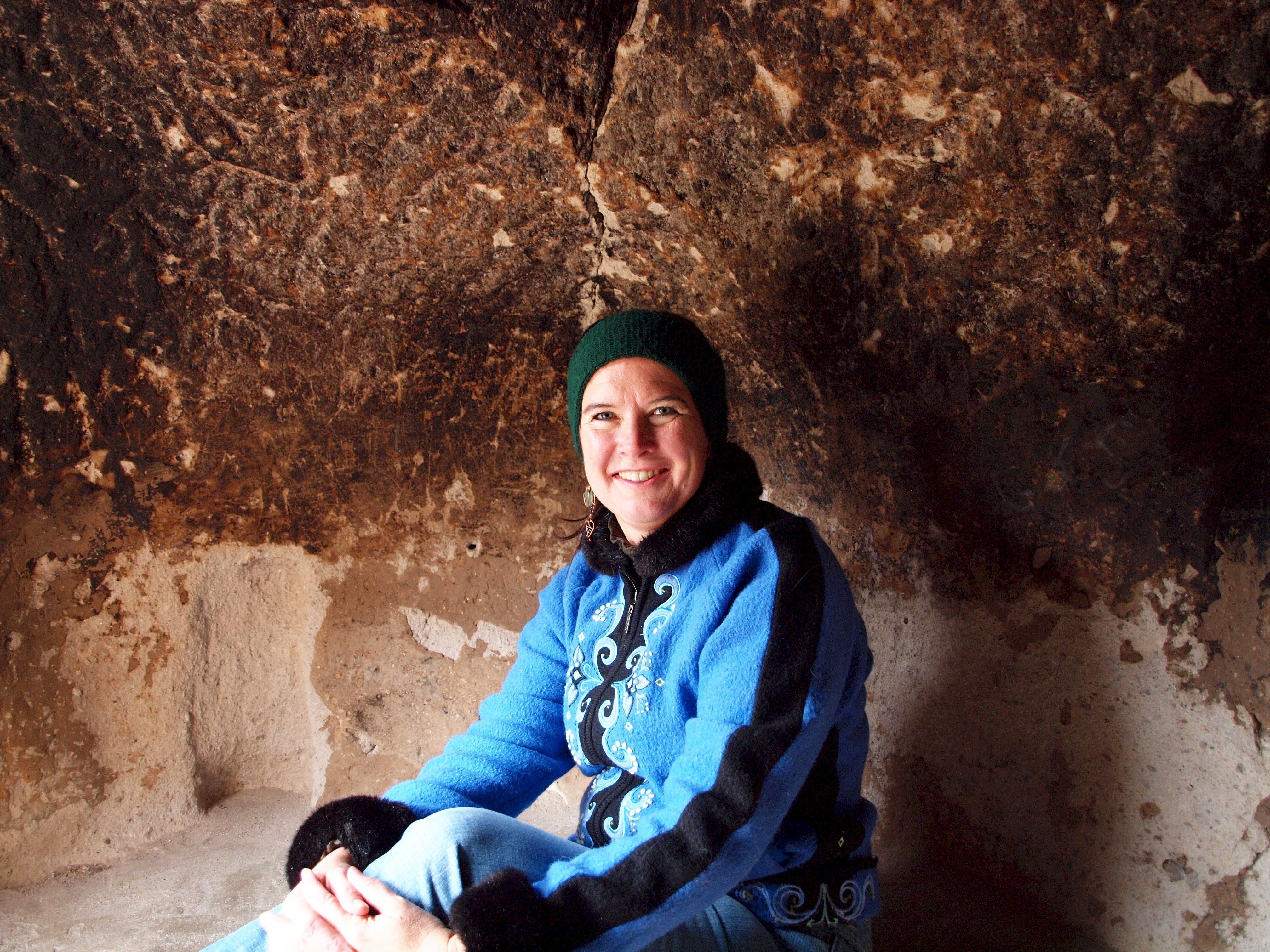
A photo of me at Bandelier National Monument this last weekend. The cliff dwellings are particularly fun to see, since you can climb up into them.

It’s interesting to sit in these caves and imagine being the person who lived and loved there. The life expectancy of the Ancient Peublo People (we are not to say “Anasazi” anymore, for those who know that term, because it’s not PC. Who knew??) who lived in this canyon was an average of 35 years. Being a good ten years older than that gave me a bit of pause.

We have such a luxury of time in our lives today.

Yesterday I posted about becoming a better writer and Ann Patchett’s analogy of cleaning the pipes. A corollary to this way of thinking, that only occurred to me later in the day, is that those early works just may never be any good. Those “searing works of unendurable melodrama” that we have to clear out of our systems may have to stay in the sludge heap of hazardous waste. Some stuff is so toxic, or just plain irredeemable, that it can’ t be purified, even by dint of repeated revisions.

I’ve worked with wastewater treatment plants – believe me, I know.

Not everything makes it into the effluent. A whole lot of stuff has to be picked out and discarded.

None of us really wants to face this possibility, that the novel we slaved over might, well, stink. Because we devoted so much time to it we believe on a fundamental level that the time invested automatically gives the thing value. It does, but not in the readers-are-going-to-gobble-this-up way. Instead it might be in the Okay-good-thing-that’s-out-of-my-system way. Sometimes the value is all in learning to be able t set something aside.

We hate this because it’s tempting to view the time as wasted. If we can’t sell the product, then we squandered the effort. This kind of thinking is never accurate. Knowing what not to do can be more informative than accidentally hitting gold.

And as for time? We have such a bounty of it.

Washing the Pipes

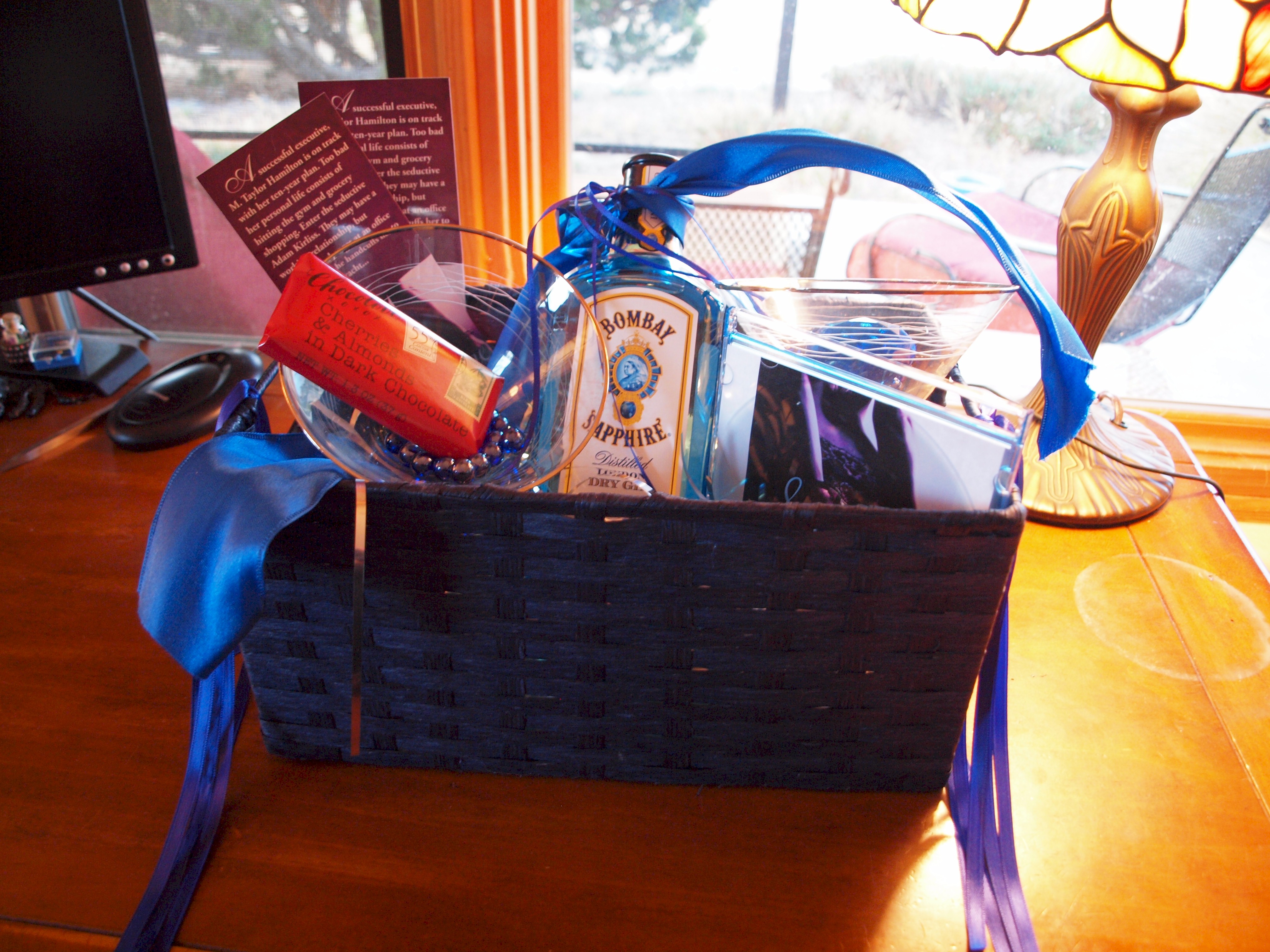
This is the basket I put together for the LERA Enchanted Words conference last Saturday. Seemed like it was quite the hit.

Overall the conference was a great day. I loved hanging with my writing buddies and debating craft questions. Everyone went away excited and inspired, which was great to see.

Yeah, there’s a bit of a “but” in there.

I confess I have a bit of an issue with people who purport to teach how to write a bestseller. If a person is so certain of the “bestseller formula,” then I’d think they’d put their energy into writing that, instead of telling other people how to do it. There’s quite a few folk out there these days, saying they teach writers through workshops, master classes and retreats how to make the magic happen. They charge a fair amount of money for this, too.

Frankly? It feels predatory to me.

I mean, it’s great for writers to come away from a seminar like this feeling fired up, creative, inspired and ready to work. But, in the end, I truly believe that you can take all the classes you like and nothing replaces the act of writing. Writing a whole lot. Over and over until you find your own voice and rhythm.

Ann Patchett says (remember I said I’d have more quotes from her):

Art stands on the shoulders of craft, which means that to get to the art, you must master the craft. If you want to write, practice writing. Practice it for hours a day, not to come up with a story you can publish, but because you long to learn how to write well, because there is something that you alone can say. Write the story, earn from it, put it away, write another story. Think of a sink pipe filled with sticky sediment: The only way to get clean water is to force a small ocean through the tap. Most of us are full up with bad stories, boring stories, self-indulgent stories, searing works of unendurable melodrama. We must get all of them out of our system in order to find the good stories that may or may not exist in the fresh water underneath.

She continues with with pointed question:

Does this sound like a lot of work without any guarantee of success? Well, yes, but it also calls into question our definition of success. Playing the cello, we’re more likely to realize that the pleasure is the practice, the ability to create this beautiful sound – not to do it as well as Yo-Yo Ma, but still, to touch the hem of the gown that is art itself.

The people who want your money will chant NYT at you and tell you that’s success. Fair enough if you want that. Hell, I want that, too. But, despite what these teachers promise, there is no magic formula. If there was, they’d be using it themselves.

Back to washing out my pipes!

Finding the End

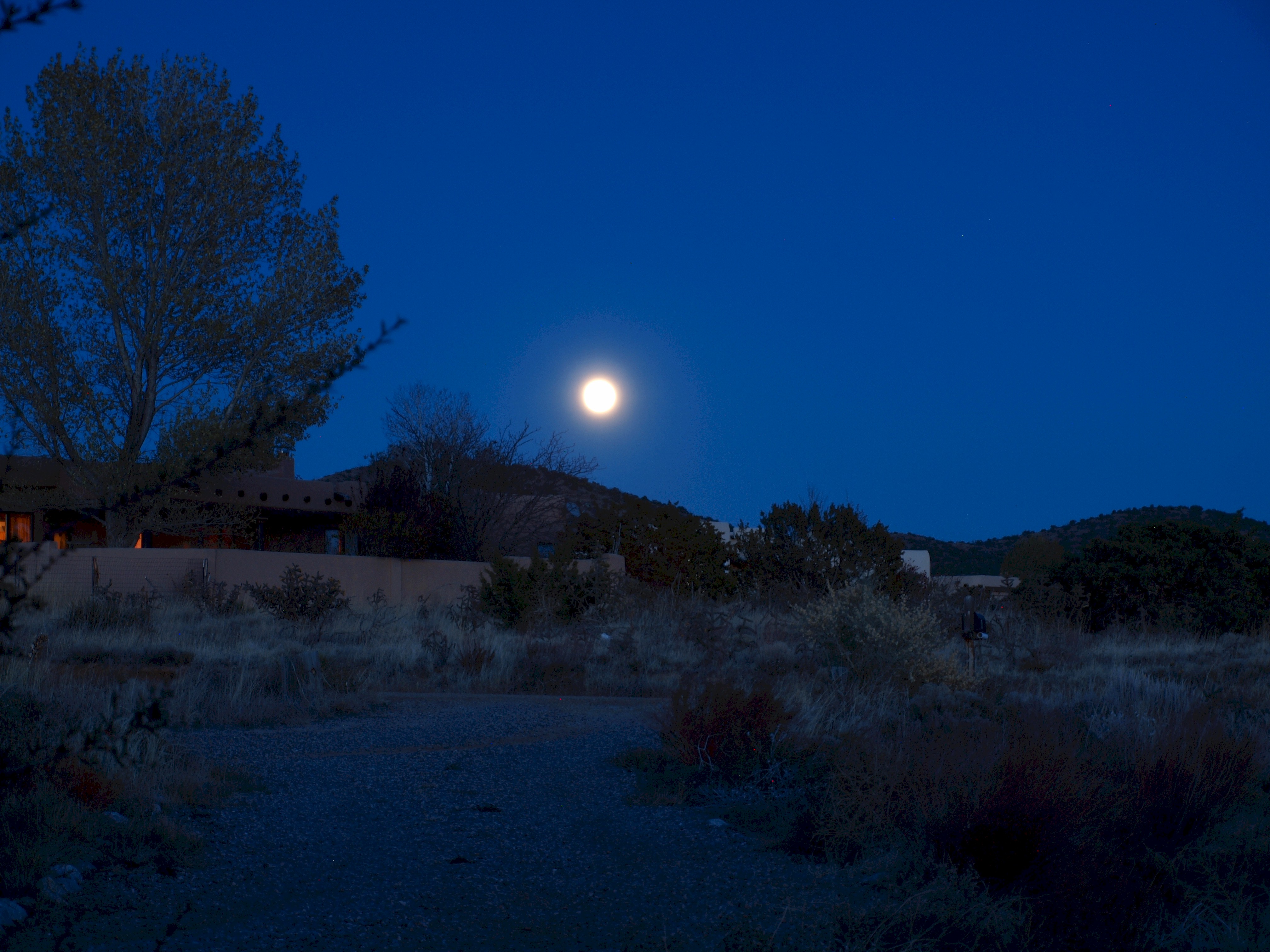
Full moon rising the other night. Just a bit of nostalgia.

I’m catching up a bit here, on photos and topics, both.

The other day (see?) I had an interesting Twitter conversation with the charming Abby Mumford. She announced to Twitter at large that she believed was done writing her novel. Then she asked how she should know if she was really done.

This might seem like a silly question. Duh – you’re done when the story is over. Thing is, when you’re writing, you don’t always know when the story is over. In fact, if you’re like most writers, the story doesn’t really end at all for you. You have this sense of the ongoing thread of your characters’ lives. Perhaps this crisis is over, but it’s not like they all fall over dead at the end, not unless you’re writing a Shakespeare tragedy.

(Even with those, the role-call of deaths in the final act begins to feel a bit contrived. Really, Will? EVERYONE??)

So, I told her that, if she’d tied up all her threads, then she was done. Even a thread that continues into the future needs a nice little knot at the end of a particular story. She thought they were, but she was feeling still unfinished. I finally suggested that she type “The End” if it made her feel better.

She did and it did.

This might seem like a false resolution, but endings, especially on first drafts, are moving targets. By the time you go back through the whole novel, cut, amplify, eliminate, massage and tighten, then ending might have moved by 45 degrees. Which is necessary, sometimes. I’ve heard that  John Irving never starts a book until he knows the last line. But I also know, from reading about his process, that he revises over and over, getting to that ending.

For me, each book is different. Usually I have to write to find out how it all ends. With Middle Princess, I’ve had a pretty good idea how it ends, but I’ve been sneaking up on that ending for days now. In the past, when I’ve gotten close to the end, the words flow in a great, ultimate rush. Not so this time. I keep telling myself it doesn’t have to be perfect, that I’ll likely change it in revision. Still, it only feeds at a measured pace. I’m tying up the knots, one by one.

Soon, I know, I’ll be done.

The Critical Step

Sometimes I wish I could make the photos really big, so all the subtle variations stand out. Guess you’ll just have to come sit on my porch. I’ll give you a blanket and a mug of mulled wine.

My waxer is a lover of sexy books and an aspiring writer.

Isn’t everyone’s?

I know, I know – it kind of sounds like an episode of Californication. My waxer – I’ll call her Angelica – is the polar opposite of Marcy. Angelica is an Amazonian redhead, with this very glam look and an incredibly sweet heart. She has a thing for firemen and runs her salon with style and aplomb. She once wrested my Kindle from me and wrote down the title and author of every book I had on it. She’s read my books and asks me questions about writing hers.

She’s at that stage where she’s still playing with it. She’s done the thing where she’s read the really awful book and thought “I could write something way better than this.” She asks me questions about my process, like if I write a book from beginning to end (I do) and how much I go back to revise (easily a month’s worth of writing time). All of this in the approximately ten minutes it takes her to give me a Brazilian. She’s not only skilled, does a perfect job – she’s also really fast.

I see her about every six weeks and two appointments ago, she told me her sister suggested that she take a one-week course on romance-writing at the Iowa Writer’s Program. I had no idea they were offering one now – go figure. I do know a fair number of writers who graduated from that program though and I have a pretty good idea that it wouldn’t be cheap. I told her it might be a great experience, but that there’s so much available online and through local RWA chapters, that she should consider starting there first. In fact, I said, the New Mexico local chapter, LERA, is having a one-day conference in November (now this Saturday) where we’re bringing in a gal to teach deep editing techniques. I told Angelica she should come; I tried to get her to mark out the day in her appointment book.

And she totally balked. She didn’t really have five opening chapters. She wasn’t ready to learn to edit. Her work isn’t at a place where anyone else can look at it. It didn’t matter that I told her she had three months to put those five chapters together, that only she would see it and that learning to look critically at your work is a huge step.

She wasn’t ready and I let it go.

So, then, the most recent appointment, she said her sister told her she’d read about all these people who self-published their books and made millions and what did I think of that? Could that be a viable option for her?

I tell you, these stories about the Amanda Hockings of the world are attaining the level of urban myth.

So, yes, I tell her – things like this have happened for people. But they are isolated cases (I didn’t mention that they’re also regularly and wildly distorted) and that the people who seem to be doing the best with self-pubbing are those writers with either established audiences or backlists of already polished work. I asked her if she’d encourage someone to open a salon who’d never worked in a professional capacity before and she got my point.

Now, I hope I don’t sound negative about self-publishing here, because I think it’s becoming a great option for many writers. But it’s disturbing to me that some people are seeing it as an option to skip the critical step. Not the crucial one, though it’s that, too, but the many-layered process where you learn to critique your own work, to assimilate the criticism of others, to incorporate editorial input that shapes the story and to view the work in light of the readers’ expectations and the marketplace.

Yes, this is the painful and awful part of being a writer. I really don’t blame anyone for wanting to skip it.

It would be a lovely world if we could write our stories and they would emerge full-fledged and perfect, ringed by rainbows and escorted by white ponies with ribbons in their tails.

This is not that world.

So, what I tried to get her to see is that she needs to apply all the work she put into becoming a terrific aesthetician – and she’s one of the best I’ve ever encountered – and to building her business and creating a well-run salon, and put that into becoming a writer. You don’t need a certificate from a fancy writing school, but you do have to work at it.

And, if you’re not ready to show it to people for critique, you’re not ready to publish it.

No golden tickets to fame and fortune, alas.

Though I wouldn’t mind one of those white ponies with the pretty ribbons.

One Great Novel

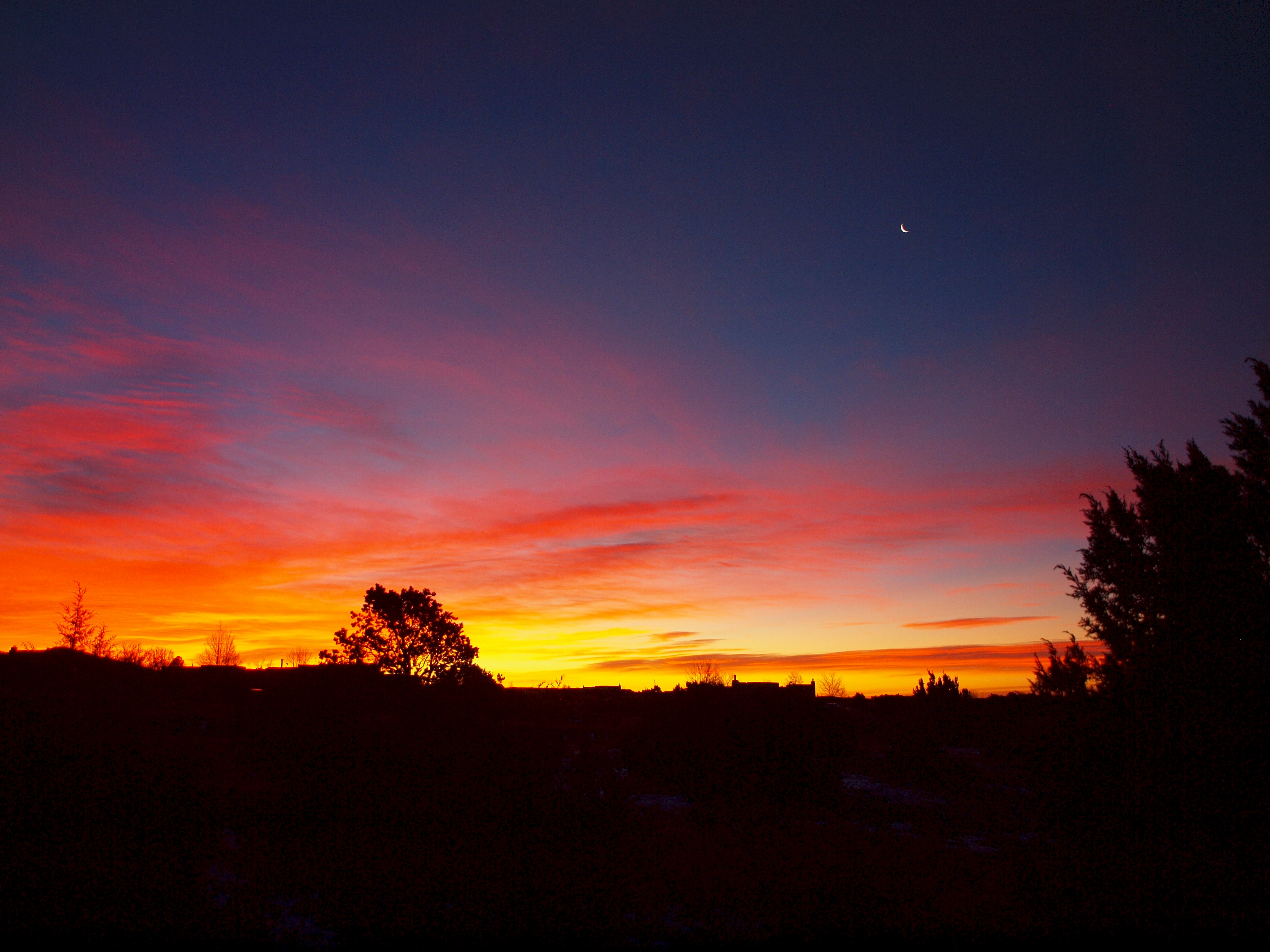
This is actually the same sunset that I posted on the blog November 3, but with a different camera and settings. In case any of you are as geeky as I am and like to compare.

Come on, you like it, you know you do.

I don’t typically read a lot of writing craft books these days. I have my favorites on the shelf and occasionally look up a particularly good quote – usually to share with someone else. Last night, though, I saw in the Kindle store (most invidious marketing tool EVER) that one of my all-time favorite writers, Ann Patchett, had a little book up on writing. I saw it because I was debating whether to buy her new book, State of Wonder. The story doesn’t look all that interesting to me, but who am I kidding? Ann Patchett is one of those writers who writes so beautifully that I don’t care what the story is. But then they want $12.99 for it, which I think is too much for an eBook. So I was wavering and I spotted this: The Getaway Car: A Practical Memoir About Writing and Life.

At last! Ann is going to explain to me How She Does It.

It’s short – only 45 pages – and it looks like she self-pubbed it. Which means she should get most of the money for it. Which I also like.

And it’s lovely.

There’s this great story in there that I just have to share with you all. Long time blog-gobblers will understand why I like it so much.

…my husband had told her I was a novelist. Regrettably, I admitted this was the case. That was when she told me that everyone had at least one great novel in them.

I have learned the hard way not to tell strangers what I do for a living. Frequently, no matter how often I ask him not to, my husband does it for me. Ordinarily, in a circumstance like this one, in the Masonic Lodge in Preston, Mississippi, I would have just agreed with this woman and sidled off (One great novel, yes, of course, absolutely everyone), but I was tired and bored and there was nowhere to sidle to except the field. We happened to be standing next to the name-tag table. On that table was a towering assortment of wildflowers stuck into a clear glass vase. “Does everyone have one great floral arrangement in them?” I asked her.

“No,” she said.

I remember that her gray hair was thick and cropped short and that she looked at me directly, not glancing over at the flowers.

“One algebraic proof?”

She shook her head.

“One Hail Mary pass? One five-minute mile?”

“One great novel,” she said.

“But why a novel?” I asked, having lost for the moment the good sense to let it go. “Why a great one?”

“Because we each have the story of our life to tell,” she said. It was her trump card, her indisputable piece of evidence. She took my silence as confirmation of victory, and so I was able to excuse myself.

I couldn’t stop thinking about this woman, not later that same day, not five years later. Was it possible that, in everybody’s lymph system, a nascent novel is knocking around? A few errant cells that, if given the proper encouragement, cigarettes and gin, the requisite number of bad affairs, could turn into something serious? Living a life is not the same as writing a book, and it got me thinking about the relationship between what we know and what we can put on paper.

So now I’m thinking about that, too.

Is Writing a Really Good Book Enough?

I did a chat with the FFP gals last night and for the first time I was tempted to say one of the things I hear authors say that really annoy me.

One of the gals asked how to get published with Carina Press, because they’re really difficult to get in with. I wanted to say, well, they’re really picky and are pushing for a high-quality brand, so write something very good.

As regular readers know, I hate it when authors give publishing advice along the lines of “write a really good book.”

I dislike this advice for three reasons:

1. It’s self-evident. OF COURSE you have to write something good. Nobody tries to write bad stuff. Sometimes we don’t push the story or the characters as hard as we should. Sometimes we don’t revise enough, or polish enough. But everybody wants their stories to be good. This is akin to the advice to send in your best, most polished work. It implies that there’s some kind of external, quantifiable standard for that. Wouldn’t it be nice if writing was like chemistry and the document changed into a different color when you hit the correct amount of revision? Bing! Now it is GOOD.

Yeah, dream on.

2. It’s pompous. I know I’ve been on this tear lately, but it’s obnoxious when authors preen and suggest to the questioners that, to follow in the author’s footsteps, the would-be just needs to gain that level of awesomesauce. If you say “to do what I did, you need to write a really good book” implies that your talent and skill just rises above everyone else’s like it’s ensured by the laws of physics.

And it’s not true, because:

3. It’s not enough to write a really good book. It has to be the right story, told in the right voice, that pleases the right editor, who convinces the right marketers that the right readers are out there to buy it.

So, I restrained myself from popping out the easy answer. Instead I told them what kind of stories Carina likes. I told them what my editor looks for and what my process was. I offered some leads to research their acquisitions editors, because I believe knowledge and networking always gives more power.

And I’m going to work on that answer.

Sunsets, Lenses and Second Opinions

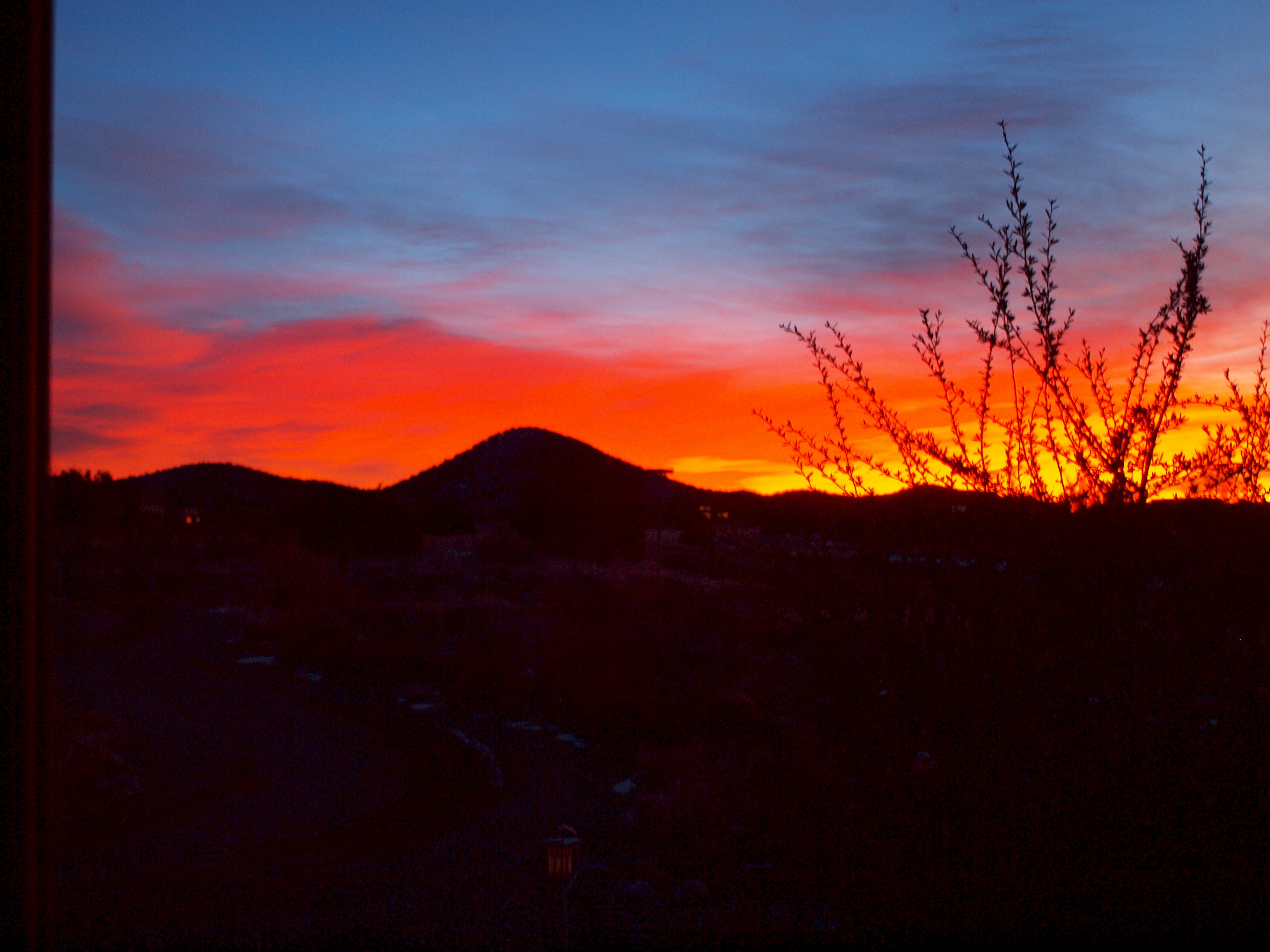
This is the same sunset that I posted a picture of on Tuesday. I took the two photos only minutes apart, but with different lenses.

I would say that I was being a good kitty and practicing to see what different lenses would do, but in truth, I forgot the telephoto lens was on there instead of the broader landscape lens. Some of the difference is that the telephoto lens focused in on a smaller part of the sky. But you can also see that the longer focal length (shorter focal length? My college physics professor is shaking his head) changes the perspective so that different shapes and colors predominate.

It’s common advice these days to always obtain a second opinion on medical diagnoses. In fact, articles recommend that, if your doctor doesn’t like the idea of you getting a second opinion, then that’s a big red flag. Patients can be misdiagnosed 25 to 50% of the time, depending on whose numbers you look at. Is this because 25 to to 50% of doctors are idiots? Well… Okay, no no no, it’s not. It’s because everyone brings a different lens to the table. Where one person sees the whole sky, another sees just one peak against a wash of crimson.

This is why having a writing group or multiple critique partners can be very important. It’s not that half of them could be flat wrong. (Well, depends on the CP, eh?) It’s more that each reader sees the story through a different lens. What’s a glaring problem to one, another breezes right past. It’s important to carefully consider the feedback a reader gives you, just as you would a medical diagnosis, but it’s equally important to evaluate it in context of how other readers see it.

I was in a writers group for many years where one member would change every single thing anyone criticized about her story. We worked mainly short stories and essays in that group, so the revision process was fairly fast. She brought the same story back to the group several times, looking for that perfect, thumbs-up moment. Finally, on somewhere around the fourth time she brought it to the group, someone pointed out that, as a critique group, someone would always find something for her to fix. This idea she had in her head that at some point we would declare it scintillatingly perfect would never occur. That only she could decide when it was done.

In the end, only one perspective is the definitive one: whichever sings to you.