Are You Really Doing It Wrong?

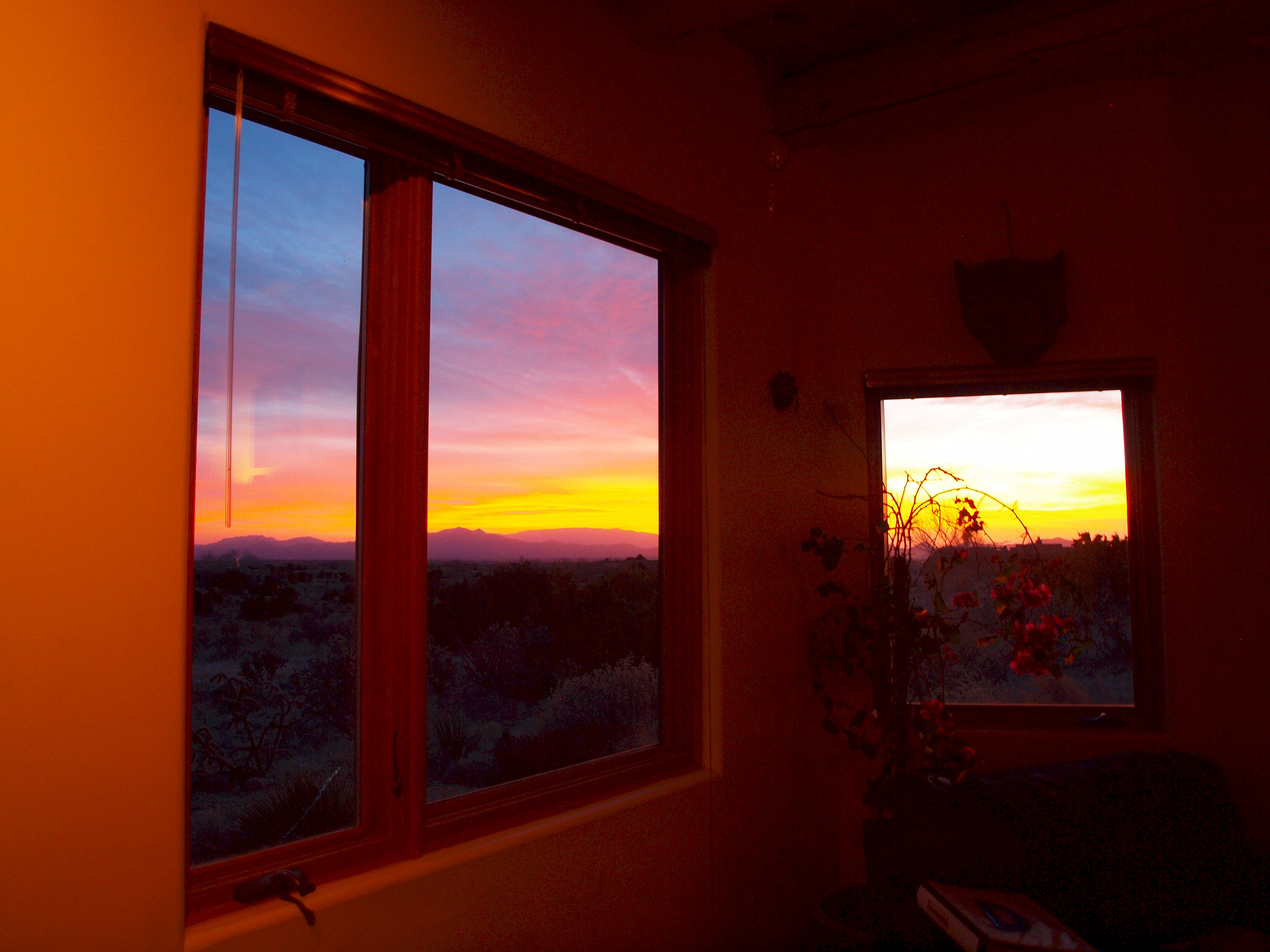
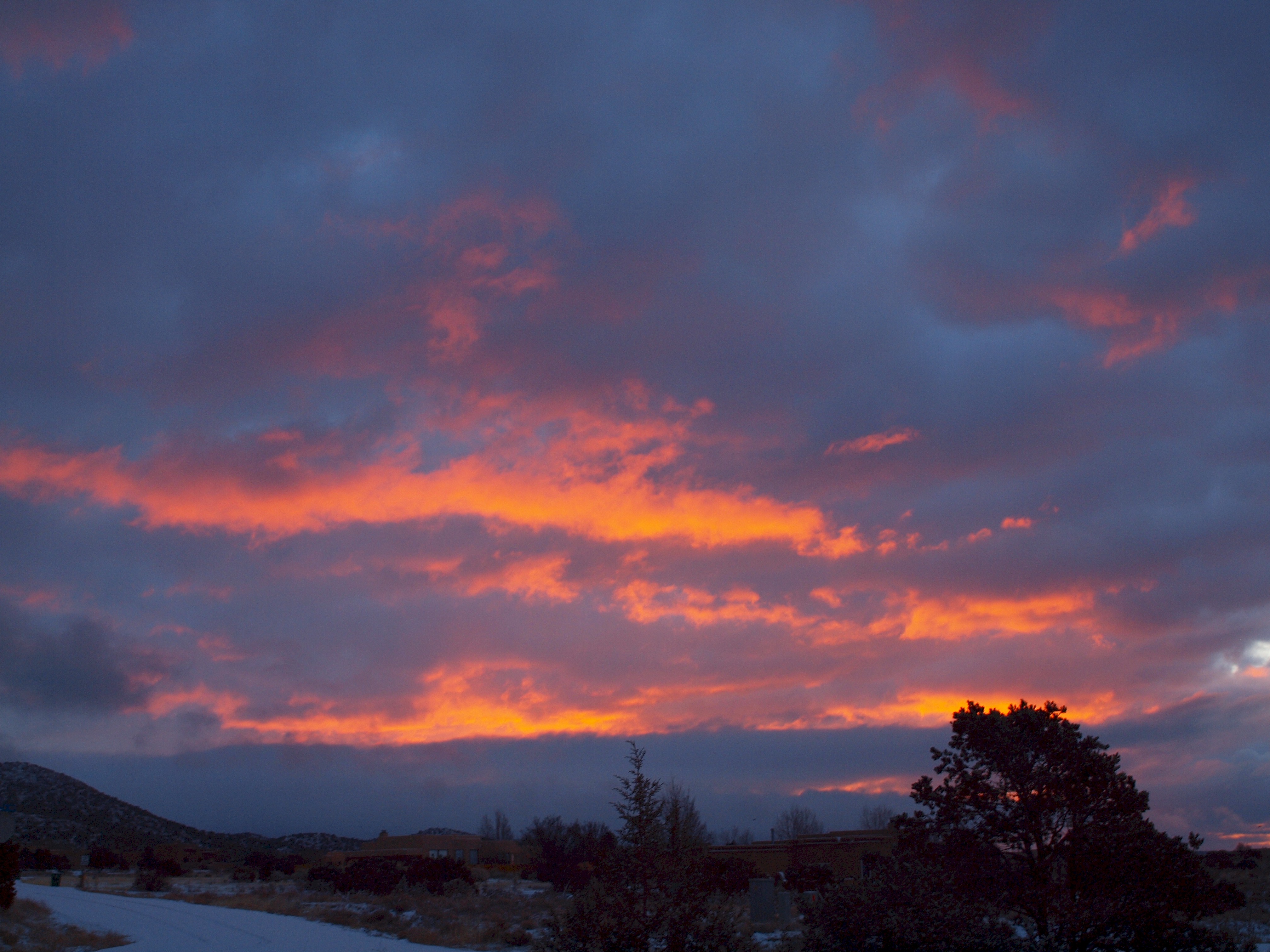
I love how the setting sun is exactly cradled between these two peaks of the Jemez mountain range. Useful to know, in case my calendar breaks.

So, you all know that one of the genres I write is erotica, particularly BDSM. I get asked a fair amount why I chose that brand of kink and I have to say that I didn’t. It chose me. I’ve noticed, in fact, that even when I’m not writing BDSM, the essential elements of it do creep in. Power exchange, intimacy, vulnerability, giving up control. When writers talk about voice, they often give the advice to pay attention to your themes, that your stories will tend to cluster around certain ideas. I almost always write about transformation of some kind and the elements of power and control usually play into that.

Since I’ve published some of this work, especially the more explicit BDSM, I’ve noticed that there’s a contingent of authors and readers who want to critique the writing in terms of verisimilitude. I’ve seen reviews and comments that people who aren’t “in the lifestyle” shouldn’t, or can’t, write about it. I see authors proudly discussing their participation in BDSM activities and citing these credentials. I’ve seen them criticizing other authors for not having, or not displaying, their credentials.

Now, this is not something I talk about. Just as in my stories, I’m a believer in privacy and intimacy. What goes on in my personal sex life is not relevant to my writing. I see no reason to discuss what I may have or have not done. Really, I don’t see why any of you would care. The characters in my stories are much more interesting – and look better naked.

I find it disconcerting then, to see other BDSM authors trotting out their credentials and saying that, unless an author has done these things – and is willing to openly discuss their own sex lives – they can’t write about it. This is patently absurd reasoning. By this line of thinking, only people who have been serial killers can write about those villians. Only master spies can write espionage novels. It totally screws all the historical and speculative fiction authors – we might as well eliminate those genres altogether.

Dan Savage, whose column I read faithfully and who I greatly admire, says that the BDSM community tends to be particularly bad about the You’re Doing It Wrong syndrome. He says in this column (scroll down to the second letter):

YDIW is a social-skills disorder that members of the BDSM community are at particular risk of acquiring. (Others at heightened risk: religious conservatives, sports fans, advice columnists.) BDSMers with YDIW feel they have a right to inform other BDSMers that they’re doing it wrong—whatever it might be—even if the “it” being done wrong poses no risk to the YDIW sufferer or anyone else.

I don’t know why this attitude flourishes in the community so much, but it does seem to. The most insidious part is, the YDIW finger pointers claim that they “can tell” whether someone has experienced something personally or not. This seems to fly in the face of the whole concept of becoming a good writer. If you hone your craft and are faithful to the story, the author should become invisible. There should never be a sense of the author intruding into the character’s lives. When reading A.S. Byatt’s Possession, the reader doesn’t speculate on whether the author has been a male Victorian poet. We all know that Jane Austen died a spinster and never experienced the love affairs she wrote about so compellingly.

When that invidious advice gets circulated, to “write what you know,” nobody ever means that you should write only those things you’ve directly experienced. That would pretty much pull the plug on all fiction. No, instead it means to draw on those themes you understand in your heart. Human experience is universal. We know how we feel in x situation; we can take that understanding and draw on it to imagine how another situation would feel.

This is what people refer to as art.

Otherwise we might as well just videotape our lives and send those out as stories instead.

Oh wait. People already do that.

At any rate, that’s my take. Unless an author is providing a how-to guide, a “Learn to Bake an Angel-Food Cake Just Like I Do!” guide, then it’s just not relevant to question how good their angel-food cake is. There’s a good chance the cake is just a metaphor anyway.

Which is nice, because you can both have and eat a metaphorical cake. And you’re not even doing it wrong.

The Magic of teh Lurv

We’re having a special Valentine’s giveaway over on the Here Be Magic blog over the next few days. Your chance to win that most special treat for any reader: gift cards to Amazon or Barnes & Noble. (Winner’s choice.) All you have to do is comment.

The Here Be Magic group is interesting. It’s the group blog for all the Carina Press fantasy authors, with “fantasy” being loosely defined. Carina has been doing a great job of acquiring and publishing some terrific science fiction, urban fantasy, paranormal and fantasy, with and without romantic elements.

Interestingly, however, the word is that the community of sci fi and fantasy readers have been slow to adopt eBooks. This seems counter-intuitive to all of us, because those readers, I would think, would be into computers and gadgets and tech. But not for books, apparently. So we’ve been thinking of ways to reach the paper-book readers and entice them with a digital book. Any ideas are welcome.

Have a lovely weekend everyone!

Introducing: Rogue’s Pawn

http://browse.deviantart.com/?q=thorns&order=9&offset=24#/dl15xhI’m thrilled to announce that The Novel Formerly Known as Obsidian has been officially retitled!

Please welcome into the world:


Rogue’s Pawn


This title is really just so perfect that I’ve been giddy with delight.

AND… even better. I have a series title, too!

Rogue’s Pawn will be the first book in


A Covenant of Thorns


I’m over the moon about having a series title and have been twirling and dancing in my head ever since.

So, join me in celebrating!  Champagne all around!!

Please Answer the Security Question

At my dayjob, I have to change my password every six months.

Such is the tyranny of IT.

And really, I understand. I do. I mean, sure, a part of me wonders what bereft soul out there truly wants to hack into my user accounts to obtain all sorts of deadly dry government reports. I can just imagine this villian. “Bwah ha ha ha! I refuse to capitulate to regular channels and FOIA this! I shall STEAL the information and then… and then… I shall HAVE it!”

This is why I don’t write espionage novels.

The thing is, I’ve been coming up with passwords for over twenty years now. Most of us have. When the whole computer thing, followed very quickly by the computer security thing, started ramping up, I had a system for passwords. I had a low-security password that I used for all sorts of non-financially related information, a medium-security one for more sensitive stuff and a high-security one for stuff that connected to money.

Yeah – I have nothing more important than money to protect.

Back then, I understood my tiering system. It was based on a coding only I understood. I easily remembered my passwords. Then they started telling me how my passwords should be. You know what I mean. More letters. Symbols. No leading or following numbers. And with complication the IT folks developed to foil hackers, the less likely they made it for me to remember all the contortions of my passwords. In fact, my passwords have gotten more consistent in many ways, because I don’t dare add my arcane spin on top of all of theirs.

And then.

The security questions started in.

Yeah, I know I’m supposed to know the answers to these things. After all, I put them in. Still, when I’m trying to transfer money in between conference calls and the computer asks me for the name of my first pet, I have to pause and think. What would have the past tense me have answered? The dog we had when I was born? The cat who was run over on the highway when I was four? The first cat that was really mine?

Or name of my paternal grandmother? Come on guys – like I have only one paternal grandmother?? We live in an age of multiply blended families. Did I pick my blood father’s mother or the mother of the stepfather who raised me? Besides, I always called her “Grandmother” – how did she spell her name again?

And don’t get me started on those first grade teacher ones. I had a team of six teachers (as I recall) and I can think of the names of about half of them. Favorite sports team? I don’t watch sports. Favorite song – are you kidding me?? When people ask me for my favorite song, book, movie, dessert, beetle or Beatle, I generally pick whichever feels shiniest to me at that moment. I don’t dare record that and hope to remember what past tense me thought she liked on any given day. As for my high school mascot, I can never remember if I think it’s singular or plural, the full name or the shortened version.

Recently, with the big Zappos hacking, I had to relinquish my low-security password. It was past time and I knew I had to do it. But it was my first password, nice and obscure, but I’ve been using it easily since 1988, I kid you not. I used it on sites like Zappos – the ones that insist I register as a customer, but with no consequences. I really didn’t care if someone ran amuck on Zappos masquerading as me, since I didn’t store any personal information on there. What were they going to do – screw up my shoe size preference?

Still, Zappos kindly sent me a warning saying that, if I used this password anywhere else, I should probably change it.

You people would not believe how many places I’ve used this one stinking password. I’m still finding them. It’s like cleaning out nearly twenty-five years of basement crap. And then examining each thing, cleaning it and slapping a brand new, infinitely more complicated password on it.

So, tell me I”m not alone in my rant. What’s the worst security question you’ve encountered?

Respecting the Tropes

I’ve been reading a lot of books lately that I wouldn’t normally pick up.

That’s because I’m judging for the Romance Writers of America (RWA) RITA awards. This is the romance genre’s version of the Hugo or the Oscar. Yeah, there might be some out there already snorting in disdain, but for our genre, this is one of the highest awards you can get. The first round is entirely peer-judged. As in, if you want to enter your book for the RITA, then you must judge. Thus, in mid-January, I received eight novels to read by the beginning of March.

We do get to pick categories, but otherwise I am reading books by authors I have never read before. All of them are a bit of a stretch from my normal pleasure reading. We’re asked to judge the book entirely on its quality and not whether or not we enjoy that particular kind of story, which is also a different lens.

It’s been interesting. And I’m over halfway through my pile, amazingly enough.

One of them is a new author discovery for me now. I gave her book a perfect score and look forward to reading more. Another, in a sub-genre I rarely read, I ranked very high. I don’t know that I’ll pick up her books again, for myself, but I could recognize how well she executed her craft.

One book, though written decently, failed as a romance, in my opinion. Oh, she had all the plot points in there. She faithfully followed the tropes, but they continued to feel empty to me. Contrived, even, which romance is so frequently accused of being.

So, here’s where I make a leap into a series of assumptions. I’m theorizing and obviously have no hard data to back up my ideas here. 

It’s no secret that the romance genre is making big bucks these days. A fact that seems to seriously annoy all those who consider romance not worthwhile. Latest stats from RWA: $1.36 billion in sales each year, the largest share of the consumer-book market, more than a quarter of all books sold are romance. What writer doesn’t want some of that pie?

More and more, I’m seeing writers of other genres coming over to the romance field, to pump up their sales. Or adding touches of romance, in order to sell it on that shelf. And sure, sometimes this is the work of the publisher or marketing department, trying to slide in under that umbrella.

The thing is, it’s difficult to wield a trope you don’t love. See, a trope is like a cliché or an archetype. They can be powerful devices or cardboard dummies. A good romance embraces the full emotionalism of people coming together, with all the silliness, hearts, flowers, flying cupids, spats, passion, grand gestures and breathless, intimate moments that implies. It’s not easy to write  clichés in a new, vivid and heartfelt way. But if a writer doesn’t tap into that deep store of energy that fuels the tropes in our hearts and minds, then all of that becomes cliché in the worst possible sense.

All of us romance readers love to giggle at the tropes. There are great blogs out there that encourage these discussions. We laugh at the impossibly virginal, feisty heroine and the alpha-male hero who also cooks and loves to brush her hair. And yet, when it’s done right, we also sigh in dreamy delight, and follow their story with fervent attention.

Why? Because the author takes the tropes and breathes life into them.

That doesn’t happen if the author, deep-down, doesn’t respect the tropes.

We might poke fun at the tropes like we roll our eyes at our husbands not being able to find anything without us, but if someone else makes out like our husbands are worthless? Oh no no no.

Use the power of the trope, young author.

But beware of taking it lightly.

Letting the Babies Stay Dead

There’s a long-used term in the writing and publishing world: Kill Your Babies.

This is, of course, a euphemism for being willing to recognize which parts of your work are, well, self-indulgent tripe that needs to be cut. For some reason, it’s often the bits we’re most emotionally attached to in our work that needs to be deleted. I suspect it has something to do with that very attachment that makes those parts not good enough. We’re too invested in the meaning to ourselves to have perspective on how it contributes to the story.

Regardless, we all learn at some point to kill our babies.

What this means for most of us, though, is that we delete the offending passage or section and paste it into a document we save. We call it “Outtakes” maybe, and we keeps it forever, Precious. No, the baby isn’t dead, it’s just…Sleeping. I’m sure there are some ruthless, emotionally balanced authors out there who really, truly delete and forever nuke their babies. But many of us have them, little shriveled corpses in the basements of our laptops, that – who knows? – could one day be reanimated! The baby could live again!

The other day I re-watched Notting Hill, one of my all-time favorite movies. (I know this is my second reference to a movie rewatch. I have this Cold Virus That Will Not Die, and so I’ve been spending a lot of time reclining on the couch, alas.) At any rate, I love this movie so much, that I own it. This time I noticed there are special features and, basking in the glow of the Notting Hill love, I watched those, too. They included Deleted Scenes.

Hot Damn! MOAR Notting Hill to love!

The thing is? Those deleted scenes really sucked. They deserved to be deleted. I don’t know what went wrong with them, but they weren’t in line with the crispness of the rest of the movie. Whoever made the decision to cut those scenes exercised excellent judgment. Afterwards, I was kind of sorry I’d watched them. They diluted my glow ever so slightly with their badness.

And it made me think of all the babies I’ve been saving, just in case I can reanimate them. I’ve noticed a blog trend lately where writers are posting deleted sections of their novels or manuscripts. Kind of a fun thing – like the deleted scenes in the special features – and everyone is always looking for blog topics. Still, I’m wondering if it’s a good idea. If something isn’t good enough to stay in the story, it probably shouldn’t be read by anyone besides your CPs and your editor – who are likely the ones who told you to get rid of it in the first place.

After all, none of us really wants anyone to know about all those zombie babies in the basement. It might look bad.

I’m thinking mine might deserve a decent burial.

Sand, Sun and the Erotic Story Arc

I’m starting to think beach.

Not this particular beach, but the one I’ll be visiting in Pensacola, Florida for the Silken Sands Conference March 16-18. I’m so looking forward to this conference, not just for the warm and the beach, but because it’s a small conference packed with a lot of really great people. Two of my favorite editors, Angela James (Carina Press) and Grace Bradley (Ellora’s Cave) will be there, along with Holly Blanck (St. Martin’s) who I’d like to be one of my favorite editors. 😀 There will also be fabulous author friends there and I’m looking forward to hanging with them.

So, I’m working up my presentation in my head. Brewing it up so I can start making some slides. My workshop? The Erotic Story Arc: Not a Contradiction in Terms.

Yeah – you know what I mean.

A lot of people think an erotic story is simply porn and nothing more. And – hey, let’s face it – some can be. Over on Word Whores this week, we’ve been having an interesting debate on action scenes and whether we skim them as readers. The consensus has been that both action scenes and sex scenes suffer by being all stage direction without real story. So, in the erotic story, the sexual interaction takes center stage, but it still must serve to move the character from one place to another. That’s the core of a story: how the characters change.

Often the change in the characters in an erotic story is the simple coming together. They start out strangers and end up together – classic romantic story arc. There’s also the sexual journey, which usually involves some kind of self-discovery. I like the stories about breaking taboos or old beliefs, liberating the characters to embrace more of the world than they did before.

Any that I’m missing? I’m also looking for suggestions, of really well-done erotic stories that were also moving and meaningful.

And, if you want to see my workshop or just come hang at the beach with some fab writing and publishing people, you can still register!

Medium vs. Message

I love when the fog is in the valley. It seems so metaphorical. Doesn’t hurt that I’m above it all and still have a clear view.

I wish.

Last night I watched Practical Magic. For maybe the one-billionth time. Yeah, it’s one of my all-time favorites, for so many reasons. Some of them are definable and some aren’t. I love it for the LOOKS the women exchange, which seem to be impossible to capture in writing. A glance full of meaning in a movie becomes a cliche of crossed arms and raised eyebrows in a book. Sometimes I envy the filmmakers. I can see the scene between my characters play out in my head, but how to describe it so someone else can see it?

One of the great challenges of writing, I suppose.

Ironically, however, if there are two versions of a story, both a book and a movie, it’s rare for anyone to say the movie was better. In most of these cases, the book came first. I think the last time I read a book that came after a movie was back in the late 70s, after the first Star Wars movie (Episode IV, for the purists) came out. I read one of those tie-in books that they generated to keep the story going. I was getting big into sci fi then and loved the movie. SO disappointing. I was bewildered by the liberties taken with the story and characters. The book itself was poorly written. And gross. Seems like a light saber got jabbed in someone’s eyeball with associated flying goop. At any rate, I never read another. This might explain why I never got into fanfic of any kind. Traumatized at an early age.

Still, the point is that both books and movies tell a story, just in different ways. And books – well they pretty much read like books, no matter how the words are displayed. Jonathan Franzen, who I’m starting to think is worried no one will pay attention to his writing if he’s not being an ass waffle (thank you DYAC!), has now famously declared ebooks a threat to society. He also claims that “serious readers” – whoever those people may be – will continue to read on paper because that has a permanence that ebooks lack.

His justification is beyond bizarre. He says he can spill water on a book and it still works, which you can’t do with an ereader. Yeah, but enough water does ruin a paper book and oh, say, setting it on fire kinda ruins that permanence. But this is the kind of nut job you can’t really reason with.

What gets to me with the ensuing conversations is all the people saying things like the author of this article says:

Franzen doesn’t even take into consideration the countless self-published authors who wouldn’t have a chance of seeing their books actualized because of the old guards at the gates of publishing companies. Most of them won’t win a Pulitzer Prize, but they’ve achieved a dream of sharing their stories with the world.

I’d say it’s more to the point that Franzen would think those people shouldn’t be published if the can’t get through the gates. (Not my opinion – speculating on his.) But that’s neither here nor there. People continue to conflate self-publishing with digital publishing. It’s bizarre to me, because this is demonstrably not the case. I can purchase Franzen’s Freedom from Amazon as a hardcover ($14.44 as of this posting), paperback ($10.88), ebook ($9.99) or audiobook ($37.79). If I read it on paper, will my experience be more serious than on my Kindle?

It’s absurd to think so.

As for permanence, if I leave my hardcover or paperback out in the rain, I’d have to buy a new copy. If I leave my Kindle in the rain, I still have my entire library of books backed up in the data cloud. Which is more permanent?

And what about the audiobooks? Are they evil, bad and a threat to society, too? I can’t recall seeing attacks on audiobooks like we’ve seen on ebooks.

It’s all the same hysteria over change. Which is fine. I understand. We all hit a point where we simply can’t adapt to yet more more technology. But don’t dress up your mental inflexibility as wisdom.

And leave my ebooks alone.