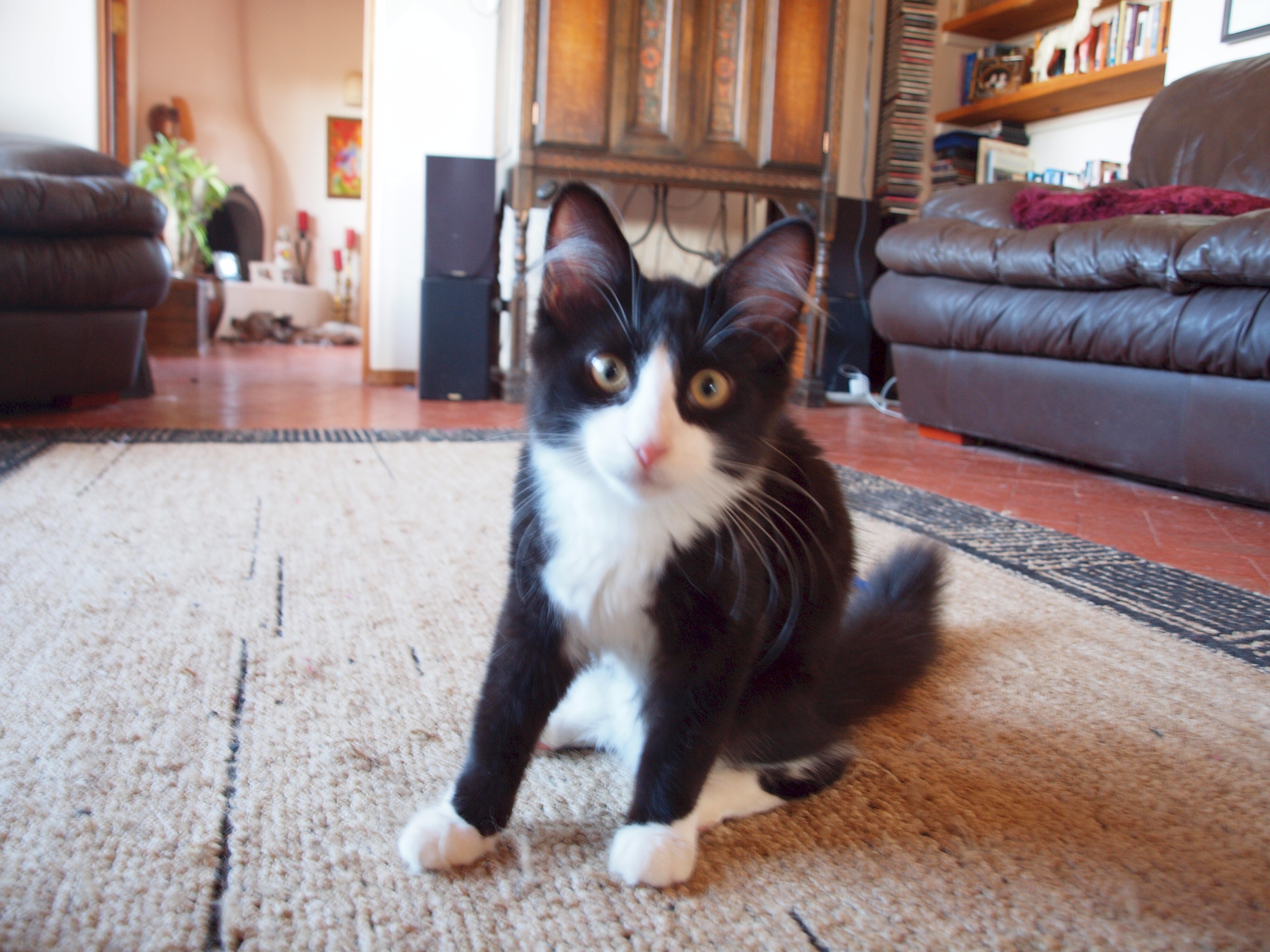
 I notice a lot of my photos of Jackson, the New Kitten, are not crisply in focus. This is because he’s moving. All the time. And he’s fast, too.
I’m over at Word Whores today, talking about which literary character I wish I’d created and why.
RITA ® Award-Winning Author of Fantasy Romance
 //
//I notice a lot of my photos of Jackson, the New Kitten, are not crisply in focus. This is because he’s moving. All the time. And he’s fast, too.
I’m over at Word Whores today, talking about which literary character I wish I’d created and why.
//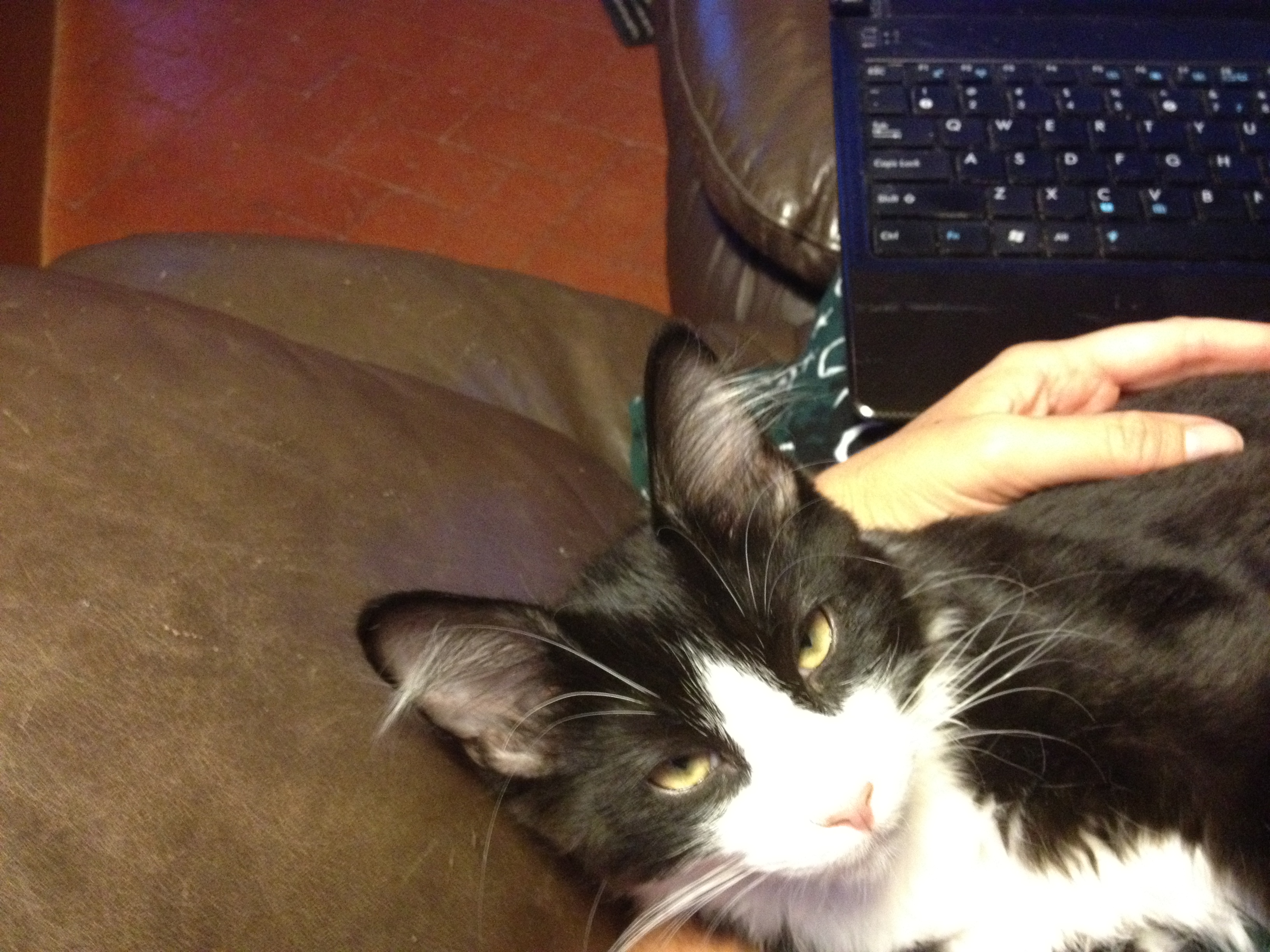 Who would not be seduced by this face, I ask you?
It seems the debate on “real literature” and “serious reading” will continue to roll on. It’s occurring on so many levels, with so many lines being arbitrarily drawn. There’s the Literary camp, of course, who accepts only a few authors into their lofty ranks. I really like this summation by Neil Gaiman in answer to a question on his Tumblr about why his teacher says Gaiman’s book isn’t “real literature”:
“Never try to teach a pig to sing; it wastes your time and it annoys the pig,” as Robert Heinlein once said.
I mean, you could ask your teacher to explain why Watchmen’s on the syllabus, if it’s not real literature. Or why TIME picked it as one of the 100 best novels of the Twentieth Century, but that will probably just make your teacher even more defensive. And mostly you’ll just be trying to explain to someone who is color blind why red is a really nice colour.
(About twenty years ago I was on a flight to the US, and sat next to an English professor at some middle-range US university, and we talked about books, because I love talking about books. And his specialty was early twentieth century literature, and I thought our conversation was going to be so much fun, until I realized that he really didn’t know any authors who he didn’t teach. He could talk Hemingway or Fizgerald, but as soon as I started mentioning authors equally as interesting out of the canon, and I was sticking to American authors because he was, you know, American, he started looking hunted; and I felt a little sorry for his students, but only a little, because even a bad teacher can’t stop you reading in your own time.)
I saved this link and this story because I think it speaks volumes. For a long time English and Literature classes famously only taught a few writers – often referred to as “dead, white males.” This has opened up, but judiciously, to minorities and females. But, as there’s an idea that lines must be drawn, most books smacking of genre are excluded from consideration.
Then, the other day, I stumbled across this really excellent essay by Ursula Le Guin. I think what we’re seeing now is these genre authors who’ve reached the age of authenticity, talking intelligently about their bodies of work, which just happen to be genre. She proposes a solution to the endless debate:
To get out of this boring bind, I propose an hypothesis:
Literature is the extant body of written art. All novels belong to it.
The value judgment concealed in distinguishing one novel as literature and another as genre vanishes with the distinction.
Every readable novel can give true pleasure. Every novel read by choice is read because it gives true pleasure.
Literature consists of many genres, including mystery, science fiction, fantasy, naturalism, realism, magical realism, graphic, erotic, experimental, psychological, social, political, historical, bildungsroman, romance, western, army life, young adult, thriller, etc., etc…. and the proliferating cross-species and subgenres such as erotic Regency, noir police procedural, or historical thriller with zombies.
Some of these categories are descriptive, some are maintained largely as marketing devices. Some are old, some new, some ephemeral.
Genres exist, forms and types and kinds of fiction exist and need to be understood: but no genre is inherently, categorically superior or inferior.
This makes the Puritan snobbery of “higher” and “lower” pleasures irrelevant, and very hard to defend.
All of this continues to be on my mind because, even within genre, there’s criticism of who is legitimate and who isn’t. Mainly, there seems to be a bastion in sci fi and fantasy that feels pressed to defend it against feminization. No “soft sci fi” is their battle cry.
So, I’d like to propose an amendment to the hypothesis, as such:
Genres exist, forms and types and kinds of fiction exist and need to be understood: but no genre or emotional style is inherently, categorically superior or inferior.
What do you all think?
//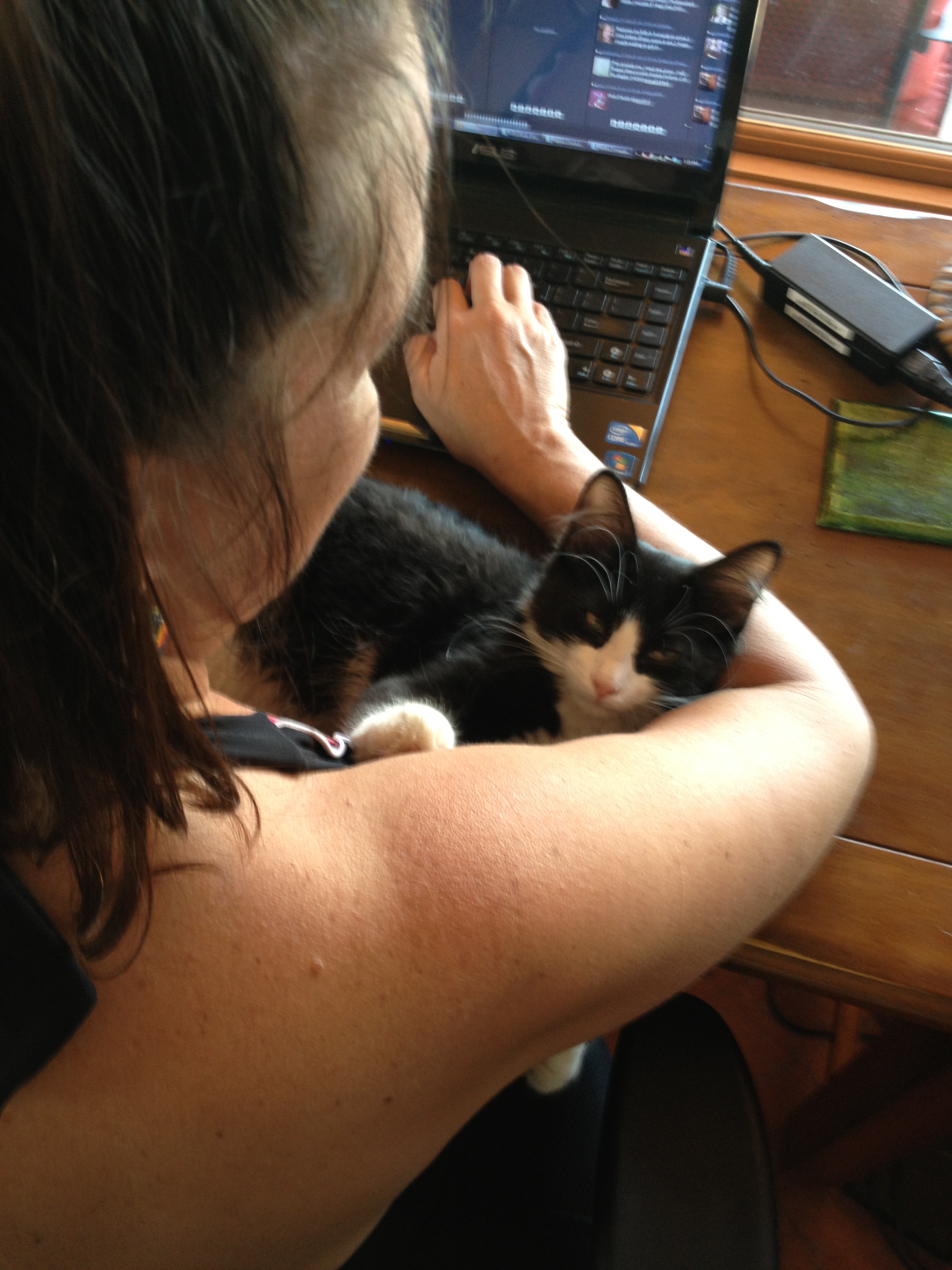 It makes it difficult to keyboard this way, but I cannot withstand the cuteness.
I took the day off yesterday – from both day job and writing. We went for a walk, had breakfast on the patio, watched the 4th of July parade and then hung out. I did a lot of reading under the grape arbor. There may have been wine-drinking involved.
I’m reading a Famous Series by a Famous Author. I’m coming in after the series is complete. Some time ago I picked up one of the books in hardback, because it looked intriguing and right up my reading alley. Also I had really enjoy this author’s historical/time-travel romances. I tried several times to get into it and never got past page 52. (I know this, because when I got it out this weekend, that’s where I’d left it marked.)
Recently, several readers mentioned that Rogue’s Pawn has similarities to this series. When I said I’d never read it, they insisted I just must. (And no, this is not Stacia Kane’s Downside Ghost series. A reviewer made that comparison and I’m just tremendously flattered. Stacy’s on her 5th book in that series and, if you haven’t read it, this review might convince you.)
At any rate, convinced that my mistake had been in not starting with Book 1 in the series, I figured out what the title was by going to the author’s website. I couldn’t tell by looking at Amazon, and read it on the Kindle. And okay – it was definitely better that way. I understood more of the story, was more invested in the characters and was willing to continue. I’m told that if I read the whole series, the payoff is big. That’s when I pulled out the hardback again and started over.
And I discovered why I’d gotten so bogged down before.
She starts the book off with recap of the story so far and lots of back story. Really boring “and this happened and that happened and then…”
The other day I posted about not slavishly following the rules, but boy howdy – that rule about not starting with back story and info-dump? Totally confirmed.
So then, I’m trudging through all this recap and she mentions stuff that I know didn’t happen in Book 1. But nowhere on this book does it tell me where it falls in the series. I went back to the author website and discover my hardback is actually Book 3. I buy Book 2 on my Kindle and start reading.
Guess what? It’s almost exactly the same damn boilerplate recap she started Book 3 with. Clearly she wrote it for Book 2, then just slapped it into Book 3, with a few additional details for things that happened in Book 2.
I just don’t get it. I mean, I know it’s not easy weaving in back story. My friend Allison Pang really bled over that when she wrote her Book 2. All I can think is that the author is Famous enough that her editor let her get away with this.
Thing is – it’s awful. And it absolutely stopped me from getting into her series when I blithely picked up Book 3 without knowing it.
Now I feel much better about how I’ve handled back story in RP2.
If I ever do this boilerplate thing? Somebody slap me!
//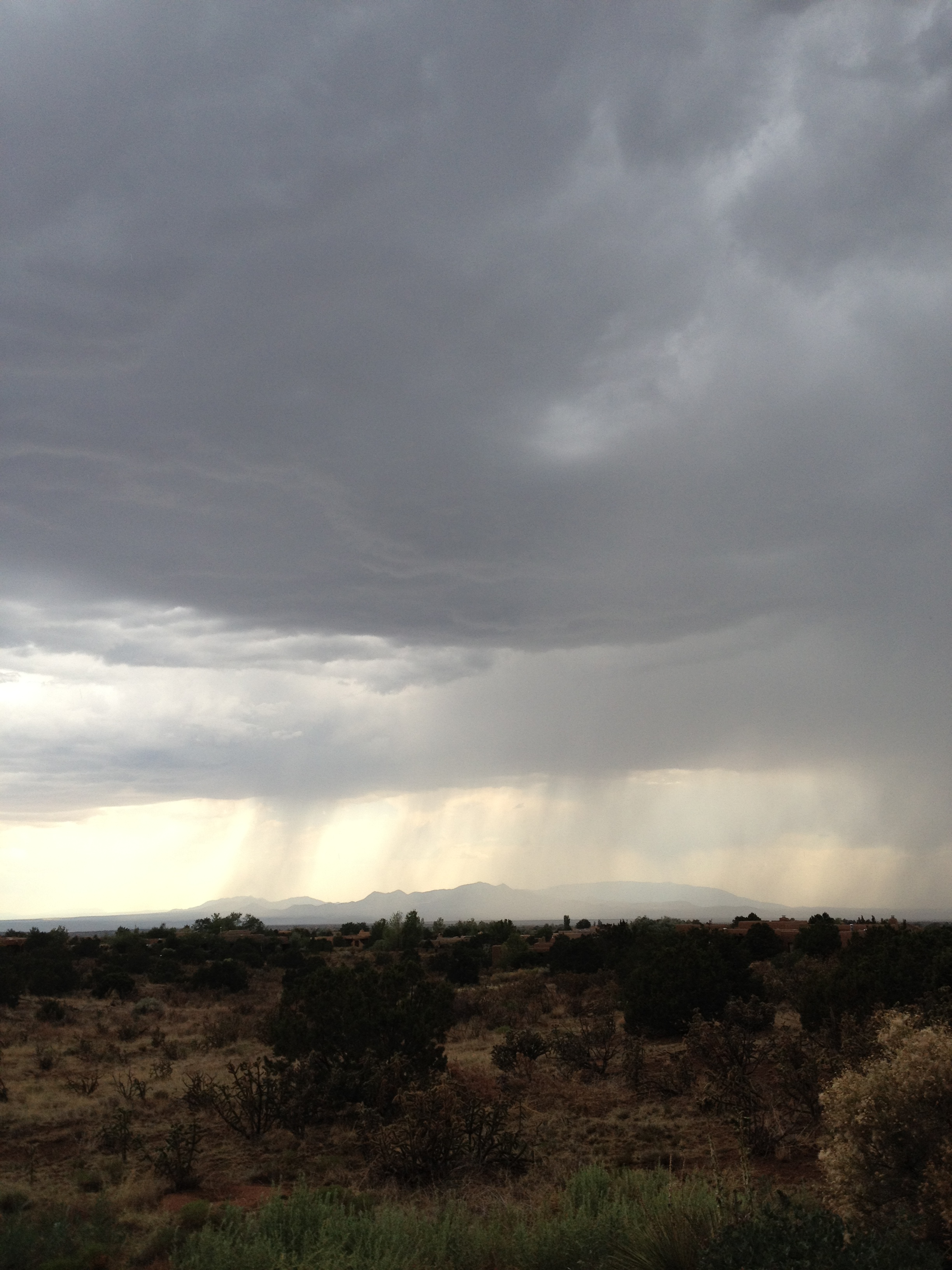 We interrupt the regularly scheduled kitten photos to celebrate the fact that it rained yesterday! Such a blessing on our parched and tinder-dry land. We’re fractionally less flammable now and the birds are going crazy this morning. It’s like everything sprang to life overnight.
Quite a few years ago, an acquaintance of mine who sang and played guitar on the side, said that he just hated Norah Jones. “She sings flat,” he said, and went on about how bizarre it was that someone who sings flat could be successful. I went home and listened to her again. (And I just put her on now.) I love the sound of her voice. It’s distinctive, unique and moving.
I thought of this because Amanda Palmer responded to a tweet yesterday on the topic. A fan tweeted:
@sevocean I think the only person who can make off key sound good is @amandapalmer.
She retweeted and replied:
@amandapalmer patti smith. bob dylan. tom waits. polly styrene
I saw this and suggested Leonard Cohen.
She retweeted me (cuz I’m a speshul snowflake) with the hash tag #fiercelyoutoftune.
This led to a great discussion of all these singers who do sing out of tune. And, among the musicians, about how autotune has changed things, because pitch can be electronically defined now, instead of the performer tuning her instrument to her own ear. Then someone asked and she answered:
@amandapalmer actually, yes. there really is…. RT @TinaH37 is there a secret to singing out of tune perfectly?
@amandapalmer ability to embrace, bend and feel around (or call attention to) roughness in your own voice is a SKILL (see Jeff magnum, Kurt Cobain, et al)
I just love that.
What does this have to do with writing? Well, there’s been an ongoing discussion on the RWA PAN loop about the “Rules” of writing. A gal started the thread saying that her critique partner (unpublished, but an aspiring editor and writer) insisted on certain conventions. Things like never using adverbs. Never use the word “suddenly.” Never use filter phrases like “I realized” or “I wondered.” The consensus has arrived at the idea that when people are learning a craft, they cling to rules. They want to do everything exactly right, so they’ll succeed.
However, as evidenced by the #fiercelyoutoftune discussion, artistry is often found in transcending the rules. That’s where you find the unique take, that special touch that sends a shiver down your spine. This is something my acquaintance couldn’t understand about Norah Jones – she is successful because of the way she sings flat, in her own special, sultry way.
This is voice. For both the singer and the writer
//
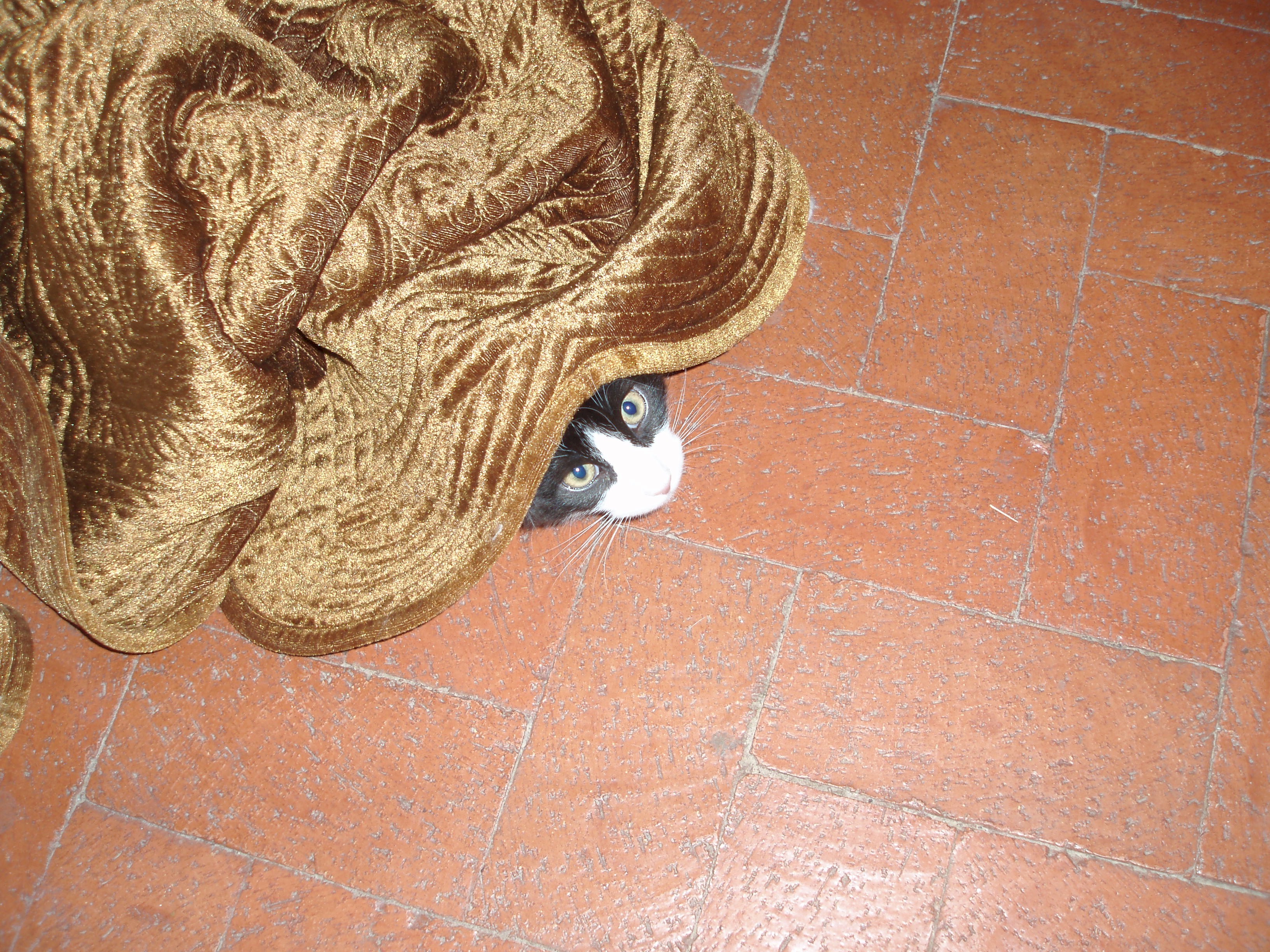 You all have figured out you’re in for cute kitten pics for quite a while, right?
Last week, there was quite a bit of discussion regarding a blog post from a librarian. It was kind of an odd post, with a number of internal conflicts. Basically she said people should stop criticizing readers of Fifty Shades of Grey, because people should be able to read what they want to read. Then, in the next breath, she declared that serious readers never read Harlequin romances. Other librarians, bloggers and reviewers passed the link around, straining their brains to understand how she could believe both things. And, of course, it all prompted declarations that they were not serious readers. (It was generally agreed that serious readers frown a lot.) I believe there may be a t-shirt in the works.
The thing is, I don’t think her opinions can be parsed, because she’s really just declaring her own preferences. She liked Fifty Shades. She doesn’t like Harlequins. Okay. What’s salient is that preferences aren’t really arguable. In fact, they’re mainly affectations.
When we’re young, we establish likes and dislikes as a way of defining ourselves. You know – “I like purple. Unicorns are my favorite animal. I hate broccoli.” In fact, if you ask an adult what their favorite color is, I bet most will reflexively tell you the color they picked as a child. If you press them, most will say that they like lots of colors now. It’s no longer so important to have One Favorite Color because, as a mature adult, you’re more complex than that. You’re about far more than a favorite animal and most hated vegetable.
I think this is why it gets so much more difficult later in life to reel off the favorite author, book, song, movie, etc. If you’ve led a full life, you have long lists of these things. The book I loved when I was 16 is not the book I loved when I was 21 and is not the book I love today. For a long time, “Every Rose Has Its Thorn” was my favorite song. I still like it, but it doesn’t hold the resonance it once did, back when I was in my early 20s. Things change. I’ve changed.
To me, this is where stuff like “serious readers don’t…” comes from. The person saying it wants to define herself in a particular way, so she makes a list of what she does and doesn’t like. But, really, reading should be about what she gets out of it – not what other people think about her. It’s like the people who make a big point about declaring that they hate something very popular. I saw a writer the other day declare that she would never lower herself to read Harry Potter. Now, I read the first couple books and I freely admit that I didn’t love them. Certainly not the way so many others did. They just didn’t sing to me. But this gal wanted us to know that she is a free-thinking individual, evidenced by her refusal to read something popular. She also seemed to think Harry Potter started the fantasy genre, which was mind-boggling to me, but that’s neither here nor there.
What I’m saying is, the fact that I never really got into Harry Potter doesn’t say anything interesting about who I am. I enjoyed Fifty Shades of Grey, I still think Ann Patchett is an amazing writer, though I didn’t love her last book. None of this makes me more or less serious about reading than anyone else.
I just love to read. Period. And that, I think, says something about who I am.
But, if there is a t-shirt? I totally want one.
//Delighted and thrilled that Sapphire received a 9.1 in the 2012 Reader’s Crown Awards – the second highest score.
//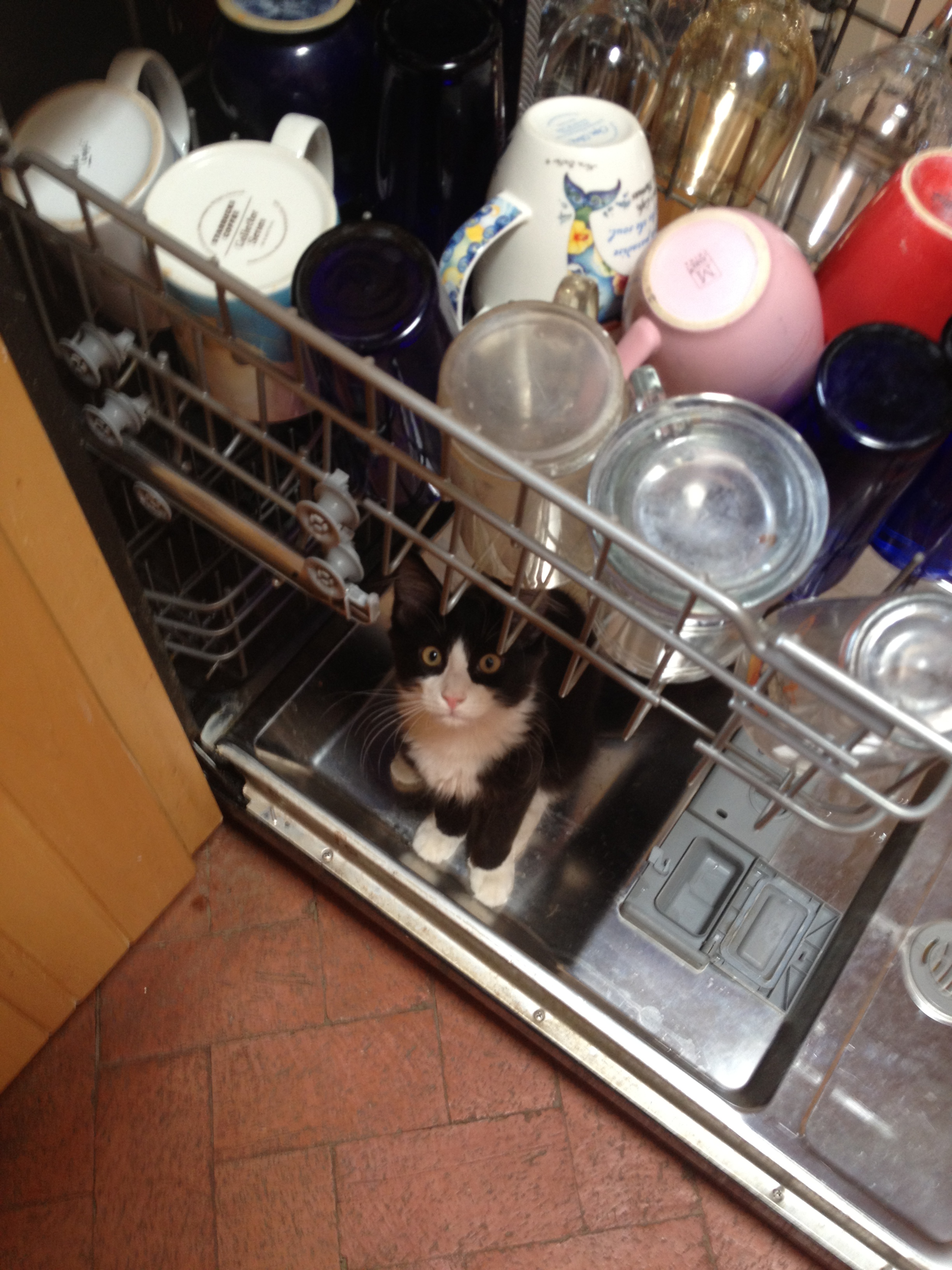 I’m over at Word Whores this gorgeous Sunday (in between household chores) talking about the advantage of small presses.
 //
//Coming Soon!
//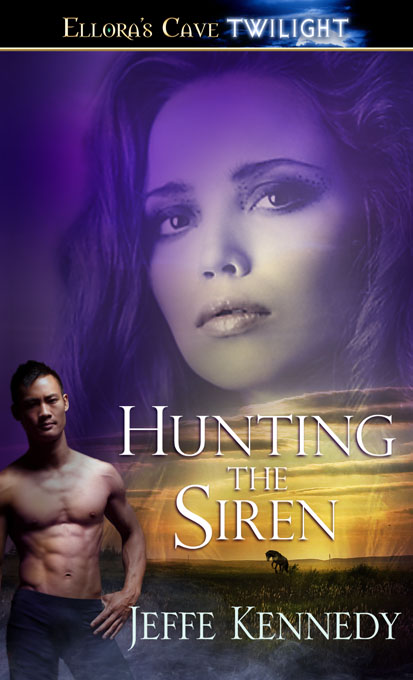 Here’s the cover for Hunting the Siren!
(No, I don’t know the release date yet.)
This is the novella I was calling Blood Siren for a while, but Ellora’s Cave has a rule that you can’t have blood in the title. Apparently it was overused, which kind of gives one pause. However, I *can* have blood in the series title, so this is officially the second book in the Blood Currency series, led off byFeeding the Vampire. In this one, Imogen is my vampire queen, living on the Russian steppes with her Nightriders. That ripped Mongol dude? That’s Kasar, who hiked out of Moscow after the earthquakes devastated that, too, and Europe sank. He thinks he’s going to go all VanHelsing and hunt Imogen down, to avenge his sister. But Imogen is no pussy cat.
Did I mention I don’t have official cover copy yet, either?
But!
Yes, here’s the sales pitch part: if you sign up for my NEWSLETTER, then you can be the first know these things! I also will include special somethings in my newsletters, which will probably be fairly few and far between, settling into your email in-box like dew on the morning rosebuds.
See, I’ve been exhorted to have a newsletter. (I don’t much like them myself.) So, I did it. Set up the newsletter sign-up link there in the right-hand column of the home page. And like SIX people have signed up. Which is really super sad and pitiful. Thus, I have a deal for you!
Everyone signed up for my newsletter by midnight, mountain time on July 8 will be entered into a drawing to win a $50 gift card to the online book vend0r of your choice! And yes, this includes you six loyal few who signed up already.
And then you get the extra bonus of fun surprises in the newsletter, too!
Isn’t this fun?
Okay, yeah, we’ll see.
Here – have an ice cream cone.
//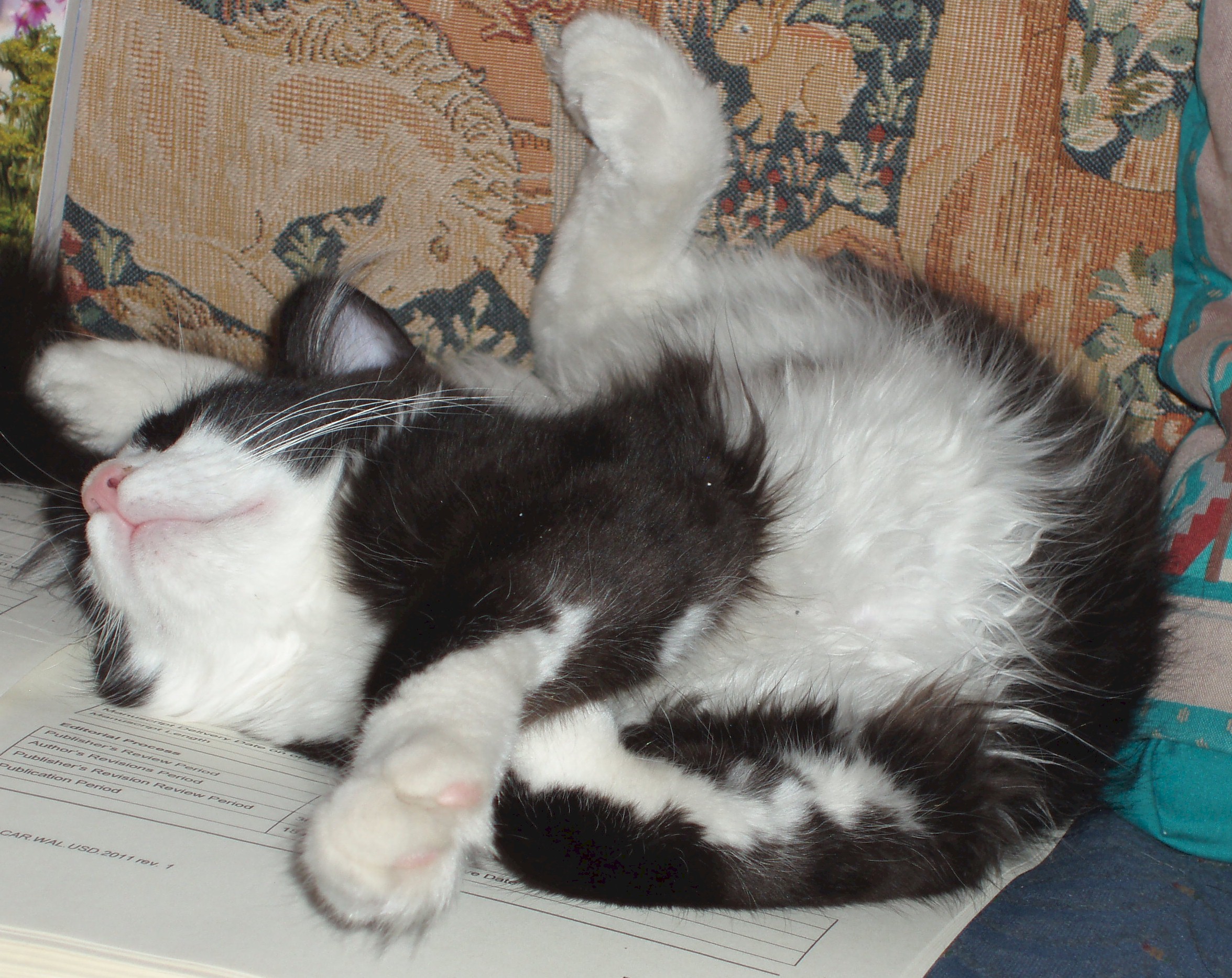 Jackson demonstrates a little kitty yoga for you. Dare you to replicate this position.
I’ve been working away on the sequel to Rogue’s Pawn, simply titled RP2 for now. I had been going fast on it, then I slowed down. It happened right as I neared the Act I climax. Usually I don’t have this problem, but usually I’m not writing a sequel.
Now, for those of you not hugely up on story structure, most stories fall roughly into three acts. This is traditional, embedded-in-the-subconscious hum storytelling. Jokes traditionally come in three parts. Magic tricks have three stages: the pledge, the turn and the prestige. (Brilliantly demonstrated in the movie The Prestige.) Shakespeare’s plays generally are in three acts (if there’s an Act IV, it usually serves as an epilogue). You can think of it in the classic terms of “boy meets girl, boy loses girl, boy gets girl back” or “get your hero up a tree, throw rocks at him, get him back down.”
So, Act I for a sequel is all about getting my characters back up a tree. I say specifically “back up the tree” because I just finished getting them out of a damn tree in the first book. It’s not that easy to get them back up the tree without making them seem stubborn or stupid or just plain self-destructive.
Plus, in the sequel, you need to ground readers in the world and ongoing threads established in the first book so that they know enough to skip reading the first book, but not so much that readers of the first book throw the second one against the wall in frustration. (A reader recently told me she did this with the most recent book in an ongoing, very long series. She felt like every other paragraph was devoted to summarizing “the story so far,” to the point that would have thrown it against the wall, except she values her ereader.)
It’s a lot of stuff to fold into the first act. Especially if you want the story to be interesting, too.
I felt like I was up against a wall, in that final scene of the first act. I’d built and built up to that point, I had an idea what needed to happen, where everyone needed to be mentally, to catapult us into the rest of the adventure (hurtling rocks – coming right up!), but I just couldn’t seem to get it into place.
Now, some writers will switch off at this point. They’ll switch to another project or write a scene from later in the story. I can see why this works – it relieves the pressure of having your creative face mashed up against that plot wall.
But, for me, all the juice is in sticking it out.
I went back and reread what I had so far – about 100 pages – and tightened and polished as I went. I worked my way back up to that wall, my steps slowing with every page as I neared that final scene. Yes, it was painful and unfulfilling. The last 20 pages took me two days of sticking it out.
Finally, the wall crumbled.
The resistance gave way and the world on the other side opened up.
Juicy, indeed.